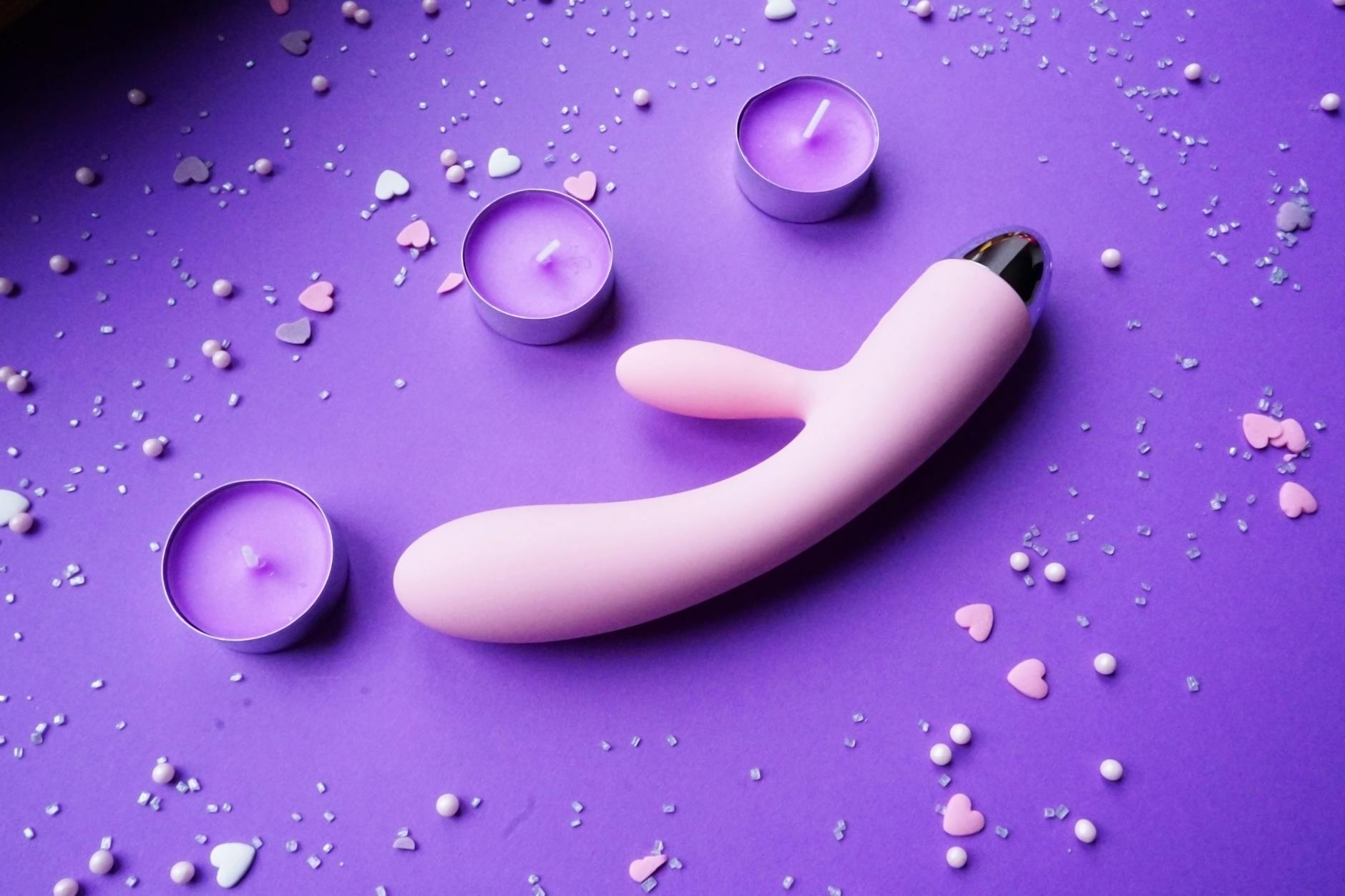
Here's the thing about vibrator intensity
There's this myth that everyone's looking for the highest setting. That if you're not using pattern 7 or 8, you're somehow not getting the "full experience." Honestly, that's backwards. More intense is not better. Better is better.
Intensity matters way less than people think, and the right intensity matters way more. The difference between finding a pattern that makes your body sing and one that leaves you numb is often just a couple of settings.
Why intensity feels different on everyone
Your nerve endings have a threshold. Go too soft, and nothing registers. Go too hard, and the sensation flattens into numbness or even discomfort. That threshold is wildly individual.
Some of it is genetic. Some of it is hormonal (which is why your ideal intensity might shift across your cycle or through life transitions like menopause). Some of it is just about what you're used to. If you've spent years with a wand vibrator cranked to maximum, your clitoris has basically learned to tune out anything gentler.
This is actually good news. It means you're not broken if you prefer lower settings. It means you have room to explore and recalibrate.
The intensity sweet spot (and how to find it)
Start with the assumption that you want the lowest setting that creates sensation, not the highest.
Begin at pattern 1 or 2. Let it build for 10-15 seconds. Pay attention to how it feels. Not whether it's working fast (it won't), but whether you can feel it clearly. If it's too subtle, move up one setting. Then wait another 10-15 seconds.
Don't rush. Rushing skips the spot where your body actually wakes up.
Once you find a pattern that feels clear and pleasurable, stay there. Spend a few minutes. Let your body learn it. Only move up if the sensation genuinely fades or if you get curious.
With a lemon vibrator specifically, the suction mechanism means you often get better results at medium-low intensities than you would with a traditional vibrator. The suction does work that the vibration doesn't have to do alone.
What changes your ideal intensity
Four major variables shift what feels right on any given day:
Arousal level. If you're just starting out, you might need pattern 3. If you've been building arousal for 20 minutes, pattern 1 might suddenly feel intense. This is normal and good.
Stress and focus. When you're distracted or tense, you'll typically need higher intensity to feel anything. When you're relaxed and present, lower settings work better. This is why environment and headspace actually matter as much as the toy.
Cycle day. If you menstruate, your clitoral sensitivity shifts across your cycle. Around ovulation, you might be most sensitive to lighter patterns. Right before your period, you might need more intensity. Track it for a few cycles if you're curious.
Time of day. Some bodies wake up slower in the morning. Some people are more present at night. There's no universal rule here, but paying attention to when you naturally feel most receptive is useful information.
The trap of always chasing sensation
A lot of people assume that if a pattern stops feeling intense, they should move to the next one. That's one choice. But often, what's actually happening is that your nervous system is adapting.
Take a break. Come back in a few hours. Stay with the same pattern for a few sessions in a row. Your body will recalibrate, and that pattern will feel new again.
This is actually one reason people report better experiences with suction-based lemon adult toys than with traditional vibrators. The variety in sensation feels fresher longer because you're not just chasing a bigger number.
Pattern preference is not fixed
You might discover that pattern 2 was always your thing. You might find that you love the rhythm of pattern 4 but only after 15 minutes of build-up. You might come back to the same lemon clitoral vibrator in six months and want something completely different.
All of this is fine. Pleasure is not a destination where you arrive and stay. It's a conversation between you and your body, and that conversation changes.
If you're exploring with a partner, this becomes a shared discovery. Some partners love watching you find what works. Some want to be the one testing the settings with you. Some prefer to ask you directly. None of those is wrong. What matters is communication that doesn't turn into performance pressure.
When to ignore intensity entirely and focus on something else
If you've tried multiple settings and nothing feels good, intensity is probably not the issue.
Check three things first.
Lubrication. Even though a lemon vibrator doesn't require lube the way some toys do, external lubrication genuinely changes sensation. If you're dry, even the perfect pattern will feel off.
Positioning. Are you holding the toy at an angle that actually stimulates your clitoris, or are you kind of guessing? Angle matters more than most people realize. The hood of the clitoris sits at a slight angle, and the toy needs to meet that.
Mindset. If you're performing or anxious or checking the clock, your nervous system is not going to cooperate, no matter what setting you use. Intensity won't fix that. Slowing down and returning to curiosity will.
If you've addressed those three things and intensity still feels off, it might be worth exploring whether a different toy design works better for your anatomy. A lemon sucker works brilliantly for many people and less well for others. That's not a reflection on you or the toy. It's just information.
The real skill with intensity settings
The actual trick is this: learn your body well enough that you can be honest about what you're feeling, and then trust that knowledge.
If pattern 1 works, you don't owe pattern 8 anything. If you love pattern 5 and have no interest in exploring higher, that's completely valid. If your intensity preference shifts from month to month, that's not inconsistency. It's information about how your body works.
Most of the anxiety around vibrator intensity comes from some imaginary standard about what you should be able to handle or what intensity means about your sexuality. It means nothing. It's just mechanics.
Your pleasure is specific to you. That's not a limitation. It's what makes it yours.
People also ask
Why does my lemon vibrator feel less intense than it used to?
Your nervous system adapts to consistent stimulation. This is called habituation, and it's completely normal. Take a break from that specific toy or pattern for a week or two, and sensitivity usually returns. Some people rotate between different lemon sexual toys or patterns to prevent this. Others genuinely don't mind; they just stay with what feels pleasant even if it's not as novel.
Can using high intensity damage my clitoris?
No. Your clitoris is robust. High intensity might feel uncomfortable or overstimulating, which is a signal to move down a setting. But discomfort is protective. You won't accidentally hurt yourself by exploring. That said, if you experience persistent pain during or after use, that's worth checking with a healthcare provider.
Is there an intensity level that works best for orgasm?
Not universally. Some people orgasm most easily at lower intensities with longer build-up time. Some prefer higher intensities with shorter sessions. Some find that alternating between patterns works better than staying on one. The best intensity for orgasm is whatever intensity you actually enjoy; the orgasm tends to follow when you're genuinely present and not performance-focused.
Do different lemon clitoral vibrator models have different intensity ranges?
Yes. The Lem, for example, offers specific vibration patterns and intensities designed to provide varied sensation without requiring you to constantly chase a higher setting. Testing the specific toy you're considering often tells you more than comparing specs. What "intensity 5" feels like on one toy might feel very different on another.
What if I can only orgasm on the highest intensity setting?
That's fine and fairly common. It might mean you prefer stronger stimulation, or it might mean your nervous system has adapted to that level. If you're curious about exploring lower intensities, you can gradually work with lower settings during non-orgasm sessions, just to keep your nervous system flexible. But you absolutely don't have to. Your body, your rules.
How do I know if I'm using the wrong intensity, or if the toy just isn't right for me?
Spend time with it at multiple settings over several sessions. If nothing across the full range feels even remotely pleasant, the toy might not be a match for your anatomy. If some settings feel good but others feel numb, you're probably just finding your sweet spot. Give yourself at least 3-4 sessions before deciding a toy isn't working. First-time use is almost never the clearest indicator.