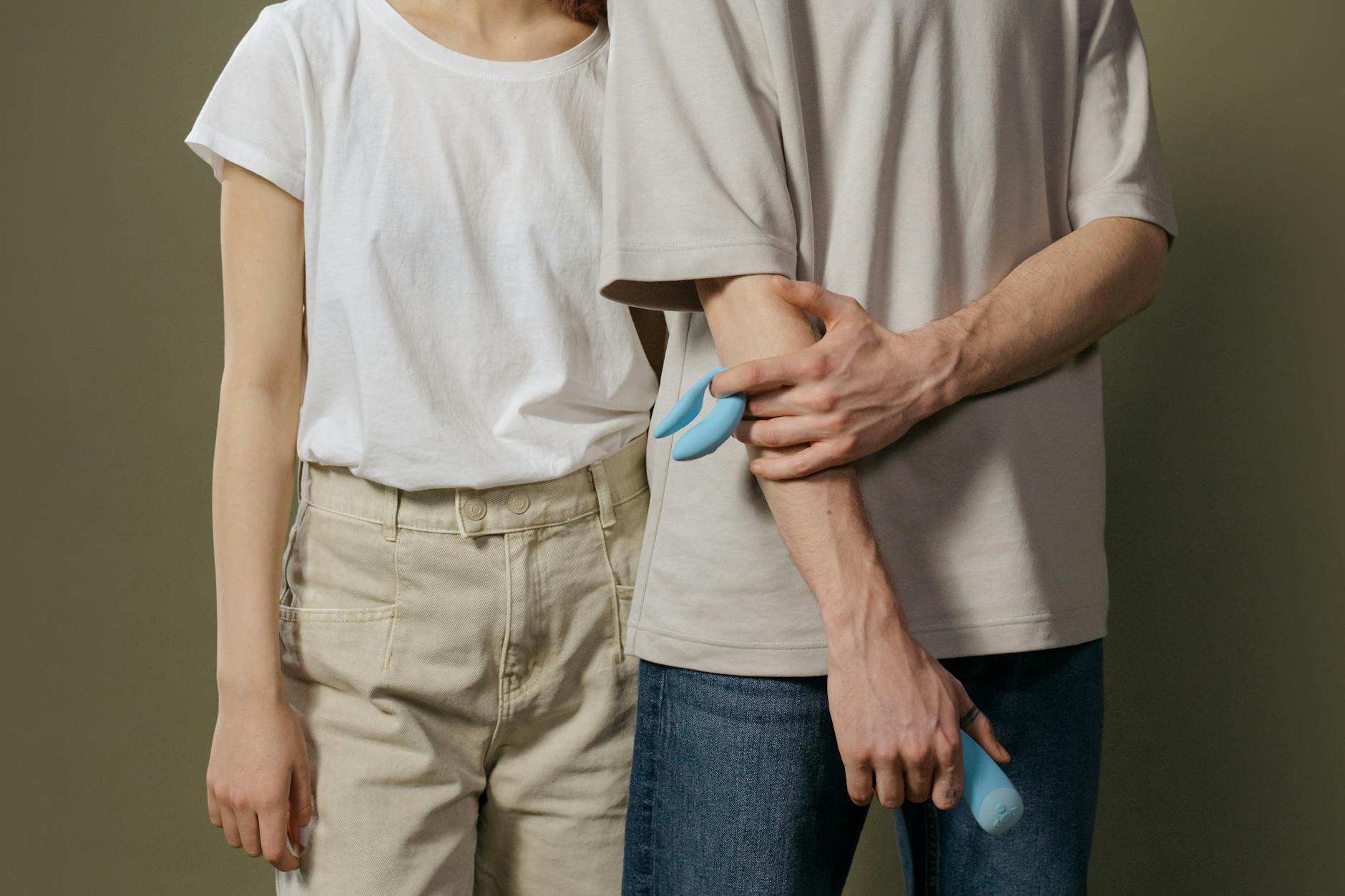
How Lemon Vibrators Work Better for Couples Communication After Infidelity
Let's be honest about what infidelity does
Infidelity doesn't just end physical intimacy. It shatters the story you both were telling about that intimacy. Sex stops being vulnerable and becomes a test. A performance. A thing to avoid because the risk of more betrayal feels unbearable.
I've worked with hundreds of couples in the first year after infidelity. The couples who rebuild lasting connection share one thing: they get conscious about pleasure again instead of just trying to "get back to normal." Normal is gone. That's actually the opening.
Why the sexual script breaks after infidelity
When infidelity happens, your body learns a new job. Sex becomes a threat detector. Your nervous system is asking questions instead of relaxing into sensation. "Am I being lied to right now?" "Is this the same person who betrayed me?" "Can I trust this experience?"
That hypervigilance kills arousal. It kills vulnerability. It makes both partners feel trapped. The person who was unfaithful often shuts down because the stakes feel impossibly high. The person who was betrayed can't drop into pleasure because the betrayal is still alive in the body.
Most couples try to force sex back into the old shape. That almost never works. You need a new shape.
How solo pleasure becomes the bridge
Here's what I recommend: before you rebuild sex together, each of you needs to rebuild pleasure separately. This sounds counterintuitive when you're trying to reconnect. It's actually the fastest route back to trust.
Why? Because when you're using a lemon clitoral vibrator alone, you're retraining your nervous system to drop into sensation without the threat detector running at full volume. You're remembering that your body can feel good independent of what happened in the relationship. You're also practicing honesty with yourself about what you actually want instead of performing what you think you should want.
Then, when you eventually come back to partnered sex, you're not asking your partner to heal you or prove something. You're already healed enough to show up.
Introducing a lemon vibrator as a couples practice
Once you've done the solo work, using a lemon vibrator together becomes a conversation tool instead of a threat. Here's the framework I give couples:
Start with observation, not participation. One partner uses the vibrator solo while the other simply watches. No pressure to perform. No expectation of sex afterward. The watching partner's job is to be present and curious, not to judge or grade the experience. This trains the betraying partner to be honest about what they're seeing ("I notice you're more relaxed when we're not talking") and the betrayed partner to practice being witnessed without shame.
Name what you notice without judgment. After a few minutes, pause. The watching partner says what they observed about tension, pleasure, rhythm. The using partner says what they felt. This is microscopic honesty work. It sounds clinical, but it rewires the connection from threat-based back to curiosity-based.
Then, if both want it, use the lemon vibrator together. One partner can use it while the other touches them differently, or they can trade turns while maintaining eye contact. The key is that the vibrator becomes a third thing you're both relating to, not a thing one person is doing while the other waits to be affected. That shared attention is what rebuilds the feeling of being in the same boat.
The neuroscience of why this works
When you introduce a lemon vibrator into post-infidelity recovery, you're doing something specific to the brain. The person using the vibrator experiences a surge of dopamine and oxytocin (the bonding chemical). The partner witnessing it experiences a hit of oxytocin just from being present with genuine pleasure. That shared neurochemical state is one of the fastest routes back to feeling like a team instead of opposing forces.
But here's what makes a clitoral vibrator particularly useful: the sensation is so focused and clean that it doesn't require the same level of trust that penetrative sex does. You're not asking the betrayed partner to surrender to another person's control. You're asking them to witness another person finding their own pleasure. That's a smaller ask. And smaller asks build bigger trust over time.
What changes between the first time and month three
In my practice, I see a predictable shift happen around the three-month mark when couples are using this approach. The first month is awkward. Someone's usually nervous. The watching partner often feels left out or worried they're supposed to want to join in faster than they actually do. That's normal.
By month two, something softens. The person using the lemon vibrator stops performing and starts actually enjoying. The person watching stops analyzing and starts being present. By month three, you often see couples reporting they've had actual conversations during sex again. Laughter. Vulnerability. Not perfect, but real.
The specific role of sensation in rebuilding safety
One thing I want to be clear about: the lemon vibrator itself isn't magic. But the sensation it provides is useful in a specific way. A high-quality clitoral vibrator like the Lem gives you consistent, predictable stimulation. That predictability matters after betrayal. Your nervous system needs to learn that something can feel good without suddenly hurting. That pleasure can be reliable.
When you're using a lemon sexual toy, you're not at the mercy of another person's emotional state or presence. You're learning to source pleasure independently. That's not selfish. That's the foundation of healthy partnered sexuality. You show up to sex having already touched your own pleasure, which means you're not demanding your partner provide something you can't access yourself.
How to talk to your partner about this
Most people freeze here. They assume suggesting a lemon vibrator after infidelity will seem weird or like they're checking out further. Actually, the opposite is true. Couples who are willing to introduce toys together are couples who've already decided the relationship is worth this level of honesty.
Try this: "I read something about how couples rebuild intimacy after infidelity. It suggested that sometimes using a vibrator together is less risky than jumping straight back into sex because it's less loaded. It might help us both relax. Do you want to try that?"
Notice that frame: less risky, less loaded, helps us both relax. That's true. And it's what your partner needs to hear.
When to see a couples therapist alongside this
Here's my non-negotiable rule: if you're dealing with infidelity, you should also be in therapy together. A vibrator is not a substitute for that work. It's a complement. The therapist helps you address the why of the infidelity, rebuild the emotional contract, and process the specific pain. The vibrator helps you rebuild nervous system safety and practice vulnerability in a lower-stakes way.
If you try this approach and either partner feels more shame, more disconnected, or more unsafe, stop and get professional support. There's no timeline on this. Some couples need six months of solo work before they're ready to share pleasure again. That's fine.
What lemon clitoral vibrators offer that other toys don't
I mention lemon vibrators specifically because they're designed for focused clitoral stimulation without requiring penetration or the same level of surrender that other toys demand. The suction and pulse patterns give you variety without complication. You can explore different intensities and rhythms without the emotional weight of "what does this mean about my partner's preferences?" that can come with penetrative toys.
Also, they're designed to feel good without looking like a performance. There's something less loaded about a sleek lemon vibrator than about a larger toy. Couples often tell me it feels more intimate and less intimidating to start with.
The timeline for rebuilding intimacy after infidelity
This usually looks like three phases across 6-12 months:
Phase One (months 1-2). Solo pleasure. Individual therapy. Separate nervous system recovery. One partner might use a lemon vibrator while the other processes and grieves. This isn't about rebuilding sex yet.
Phase Two (months 2-4). Couples therapy deepens. You introduce the vibrator as a shared experience. You're practicing being in the same room with pleasure and vulnerability again. Sex might still feel complicated.
Phase Three (months 4+). Natural desire for partnered intimacy starts returning because you've rebuilt the feeling of safety. You've practiced vulnerability. The lemon vibrator might still be part of your sex life, or you might have naturally moved into other forms of intimacy. The difference is that you chose this from a place of trust instead of obligation.
People also ask
Can we use a lemon vibrator if we're not sure we want to stay together after infidelity?
Yes, actually. Some couples don't rebuild the relationship. They rebuild their individual capacity for pleasure and then choose to separate from a healthier place. That's not a failure. The goal isn't always to stay together. It's to not lose yourself in the aftermath.
How do I know if my partner is actually trying or just going through the motions?
You'll feel it in their presence. If they're present during these vulnerable moments with the vibrator, if they're curious and honest instead of detached, you'll sense the difference. And if they're not, that's also important data. It might mean they need more individual work before couple's work. Or it might mean this relationship isn't going to rebuild. Both are worth knowing.
Will using a vibrator together make it harder to have regular sex again?
No. If anything, it makes it easier because you've already practiced vulnerability in a lower-stakes way. You've already had conversations about pleasure and desire. Sex feels less like a test and more like connection.
What if my partner refuses to try this?
That's important information. If they're unwilling to do the work of rebuilding intimacy in any form, that tells you something about their commitment to the relationship. Couples therapy can help you both understand why there's resistance. Sometimes it's shame. Sometimes it's avoidance. Sometimes it means they're not actually ready to do the work.
Can we skip the solo phase and go straight to using a lemon vibrator together?
Technically, yes. But you'll probably find it harder. Each person needs time to reconnect with their own pleasure independent of the relationship before you can safely share pleasure again. That solo time isn't a delay. It's the accelerator.
How long does it actually take to rebuild intimacy after infidelity?
There's no fixed timeline. Some couples feel significantly better after three months. Others need a year. Healing depends on how much work you're willing to do, the quality of your therapy, your nervous systems' capacity to regulate, and honestly, how much you both want to stay. There's no way to rush it.
The hard truth about moving forward
Infidelity changes things permanently. You won't get back to the relationship you had before. That's not something you should want. The relationship that allowed infidelity to happen had weaknesses. The new relationship you're building is more conscious. More honest. Harder, maybe. But more real.
A lemon vibrator can't fix that. Nothing can. What it can do is create a bridge back to vulnerability, to pleasure, and to the feeling of being in this together instead of against each other. That's not everything. But it's often enough to rebuild something worth staying for.
If you and your partner are ready to do this work, start with solo exploration. Give yourself permission to feel good without the relationship burden. Then, when you're both ready, bring that honesty into the room together. The vibrator is just a tool. What heals is the willingness to be present and vulnerable with each other, one moment at a time.
If you need support navigating this, reach out to a couples therapist or contact Hello Nancy for resources on rebuilding intimacy and communication after relationship challenges.