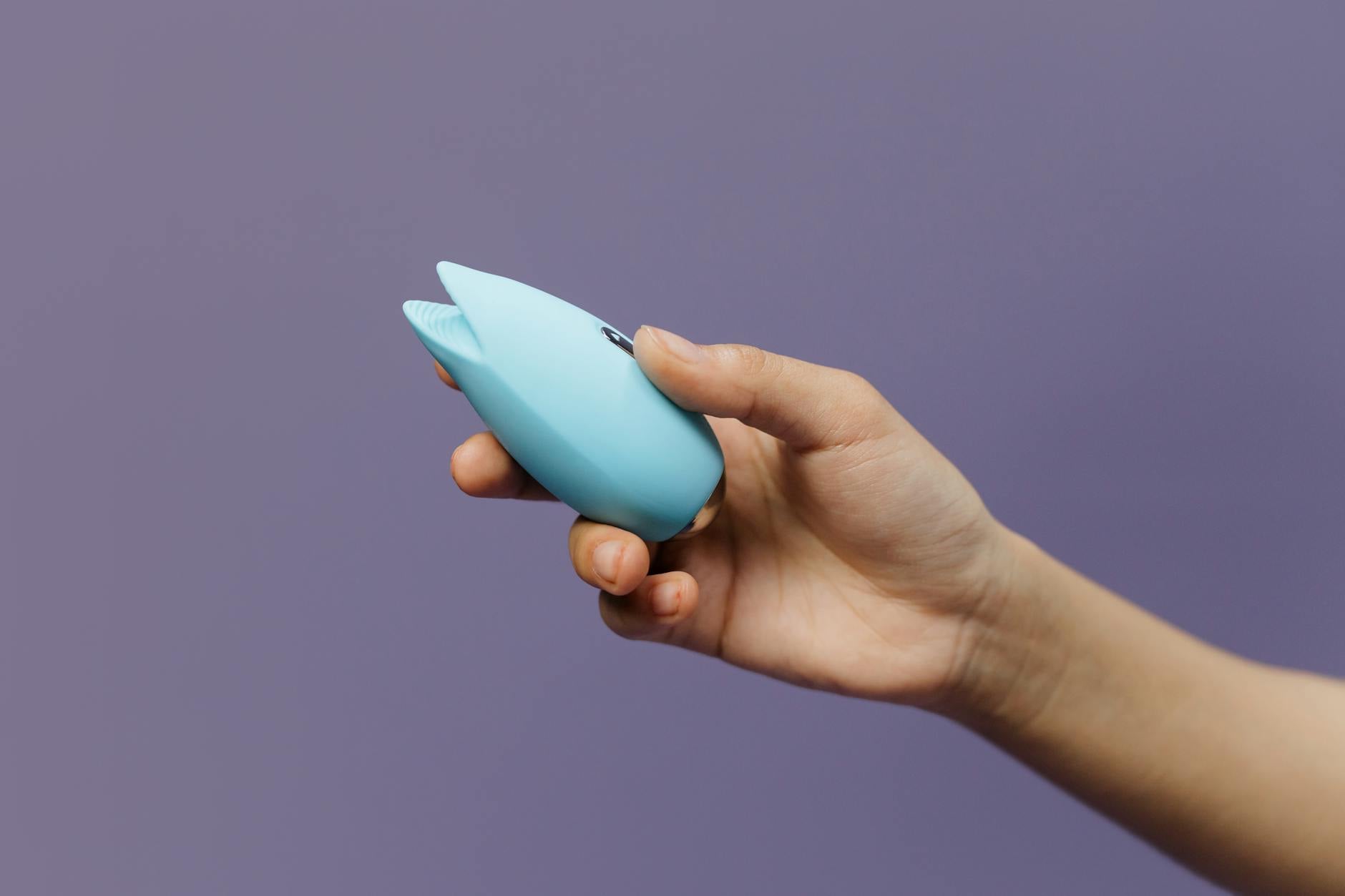
Here's what actually happens when you bring toys into the bedroom
Most people imagine it will be weird. A conversation starter lands wrong. Someone feels defensive. The evening crumbles. But here's what I see in my practice: the weirdness isn't about the toy. It's about the framing, the timing, and whether you're approaching it as "something's missing" or "let's add something fun."
The Lem and other clitoral vibrators work beautifully in partnered sex. They're not a replacement for you. They're an amplifier. But your partner needs to know that, and more importantly, they need to hear it in a way that lands.
The setup matters more than the toy
Don't spring this on someone during sex. That's not a conversation. That's a surprise attack.
The best timing is when you're both relaxed, clothed, and not in a sexual moment. Think Sunday morning coffee, a car ride, or mid-week when neither of you is stressed. You want your partner's brain available for actual conversation, not flooded with arousal hormones or defensiveness.
Pick a moment when you can say something like: "I've been thinking about something that might feel good, and I wanted to talk about it first." That one sentence shifts the whole vibe. You're not criticizing their current performance. You're not saying you're bored. You're inviting them into something.
Four conversation starters that actually work
I recommend picking one that feels most honest for your relationship.
"I read that lemon clitoral vibrators can make it easier for me to orgasm, and I thought it might be fun to try together." This is straightforward. You're naming a real benefit without blame. Research backs this up. Clitoral vibrators change nerve stimulation in ways that many people find dramatically more effective than manual or penetrative touch alone.
"I want to try something that might feel amazing, and I want you there with me." This frames the toy as a shared experience, not a solo addition. It emphasizes connection over mechanics.
"I've been curious about whether toys could change how we do this, and I'm only interested if you want to explore it." This makes room for your partner's hesitation. You're not demanding. You're genuinely checking in.
"I think we could both feel more pleasure, and I want to figure it out with you." This removes the implication that one of you is failing. It's a team project.
What your partner might actually be worried about (and what to say)
Partners worry about three things. Knowing them helps you address the real concern, not the surface one.
Worry #1: "Does this mean I'm not enough?" The answer is no, and you need to say that. "You're absolutely enough. I just want us to explore what feels best for both of us. Some people find they orgasm more easily with vibration, and that's about nerve response, not about you."
Worry #2: "Will they want the toy more than me?" This one stings because it touches status. "That's not how it works. The toy doesn't replace you. It works better because we're together. I want you here. That's the whole point."
Worry #3: "Is this weird or kinky or something I'm not into?" Normalize it. "It's pretty common. A lot of couples use clitoral vibrators because they just feel good. That's it. No shame, no weirdness required."
If your partner stays hesitant after you've addressed the worry, don't push. A forced toy isn't sexy. But sometimes hesitation softens if you give it time and stay relaxed about it. Three months later, they might bring it up. That's a green light.
How to make the first experience actually good
Once you've talked and you both say yes, the actual moment matters.
Start without the toy. Build arousal the way you normally do. Foreplay, touching, whatever works. When things are progressing and you're genuinely turned on, then bring it in. Frame it verbally: "I want to try this now. Tell me if you want to adjust anything."
Start with a lower setting. The Lem, for instance, has multiple patterns. You don't need to go straight to maximum intensity. Find what feels good. This is exploration, not performance.
Keep communication open. "How does this feel?" "Do you want me to adjust?" "What would feel better?" Your partner should also be able to direct things. "A little slower," "Higher up," "Switch sides." This keeps it collaborative instead of something being done to them.
If your partner gets uncomfortable, stop. No judgment. This might not be their thing, and that's completely okay. What matters is that you tried together and you stayed kind about it.
When one of you feels insecure mid-way through
This happens. You're in the moment, the toy is working, and suddenly your partner gets quiet. Arousal drops. Something shifted.
Stop. Ask what happened. Maybe they're feeling left out because you're focused on the sensation and not on them. Maybe they wanted to be the one moving the toy. Maybe they're overthinking it.
Here's what I tell couples: your presence matters more than the toy. If your partner needs to feel like you want them, show them. Touch them. Make eye contact. The toy is a tool. You are the connection.
Sometimes you need to rebuild the rhythm. Maybe they hold the toy and you guide their hand. Maybe you use it for two minutes and then switch back to what you were doing. The experiment doesn't have to go exactly as planned. It just has to work for both of you.
The permission piece (and why it changes everything)
Here's what I notice most: when people introduce lemon vibrators or other toys into their sex life, the shift isn't really about sensation. It's about permission.
You're giving your partner permission to want things. To ask for what feels good. To say "I need more stimulation here" without shame. You're modeling the idea that pleasure is collaborative, not transactional.
And you're giving yourself permission to receive pleasure without guilt. A lot of people, especially women, were raised to feel like asking for specific kinds of touch is selfish. A vibrator makes it concrete. You can't argue with your body's response. "This feels good" becomes fact instead of favor.
That permission is what couples tell me changes their entire sex life. Not because the toy is magic. But because it opens a conversation about what actually works.
Making it part of your regular rhythm (not a special event)
Don't treat the toy like a once-a-year novelty. If you both like it, use it regularly. It becomes normal. That normalization is actually what kills the weirdness.
Some couples use a clitoral vibrator most times. Others reach for it when they want something quicker or more intense. Some people use lemon vibrators solo and their partner just watches or cheers from the sidelines. All of that is fine.
The weird vibe only stays if you treat it like you did something unusual. You didn't. You added a tool that enhances your pleasure. People add tools all the time. A new position. A playlist. Lighting. This is the same category.
FAQ
How do I know if my partner will be open to trying a lemon clitoral vibrator?
You don't until you ask. But partners tend to be more open if you frame it as being about your pleasure, not their performance. If your partner already talks openly about sex, they're more likely to be receptive. If sex talk feels loaded or difficult in your relationship, that conversation might need to happen first. Sometimes introducing a vibrator is a doorway to better communication overall.
What if my partner thinks lemon vibrators or other toys are weird or wrong?
That's a values conversation. Some people grew up with a lot of shame around sexuality. Some have religious frameworks that make toys feel off-limits. Your response matters. Getting defensive usually backfires. Instead, ask what specifically concerns them. Is it about cheating? Impurity? Performance? Once you know the actual worry, you can address it. Sometimes patience and education work. Sometimes the answer is truly no, and you have to decide if that's a dealbreaker for you.
Can I introduce a toy without a big conversation?
You could, but I wouldn't recommend it. Surprises work great for flowers. Not for sex. A brief check-in takes two minutes and saves a lot of awkward reactions. Even just "Would you be interested in exploring toys together sometime?" gives your partner the gift of consent and anticipation.
My partner wants to use a vibrator, but I feel threatened. What do I do?
That feeling is real and worth examining. Often it's about fear of inadequacy or loss of role. Talk about it honestly. "When you bring this up, I feel..." Your partner can then reassure you or explain what they actually need. Sometimes the issue is that you haven't felt desired in a while, and the toy isn't really the problem. Sometimes you need to hear that your partner still wants you, even with the tool. Say that directly.
How do I talk about lemon vibrators if we've never talked openly about sex?
Start small. You don't need to have the whole conversation at once. "I read something interesting about how some people use vibrators" is a lighter entry than "We should definitely try this." Let your partner respond. See if they're curious or dismissive. Build from there. If sex talk feels impossible in your relationship, that might be the real thing to work on.
What if my partner gets upset when I bring it up?
Upset reactions usually mean something touched a nerve. Don't argue about the vibrator. Ask what the actual concern is. "I notice you got upset. I'm not trying to hurt you. Can you tell me what you're feeling?" Listen. Don't defend yourself immediately. Often partners calm down once they feel heard. Then you can circle back to the actual topic.
The real thing that changes
I've watched couples bring toys into their sex life thousands of times. The ones who do it well aren't the ones with the best communication naturally. They're the ones willing to have a slightly awkward conversation, listen to their partner's real concerns, and then keep going anyway.
That willingness to be vulnerable and stay connected through something new is what actually shifts the relationship. The lemon vibrator is just the vehicle. The real magic is the two of you deciding your pleasure matters enough to figure it out together.
If you want to explore this with your partner, start with what feels true for you. Then say it out loud. That's the hard part. Everything else is just logistics.
Ready to have the conversation but want more support? Contact us and we can help you think through specific language that fits your relationship.