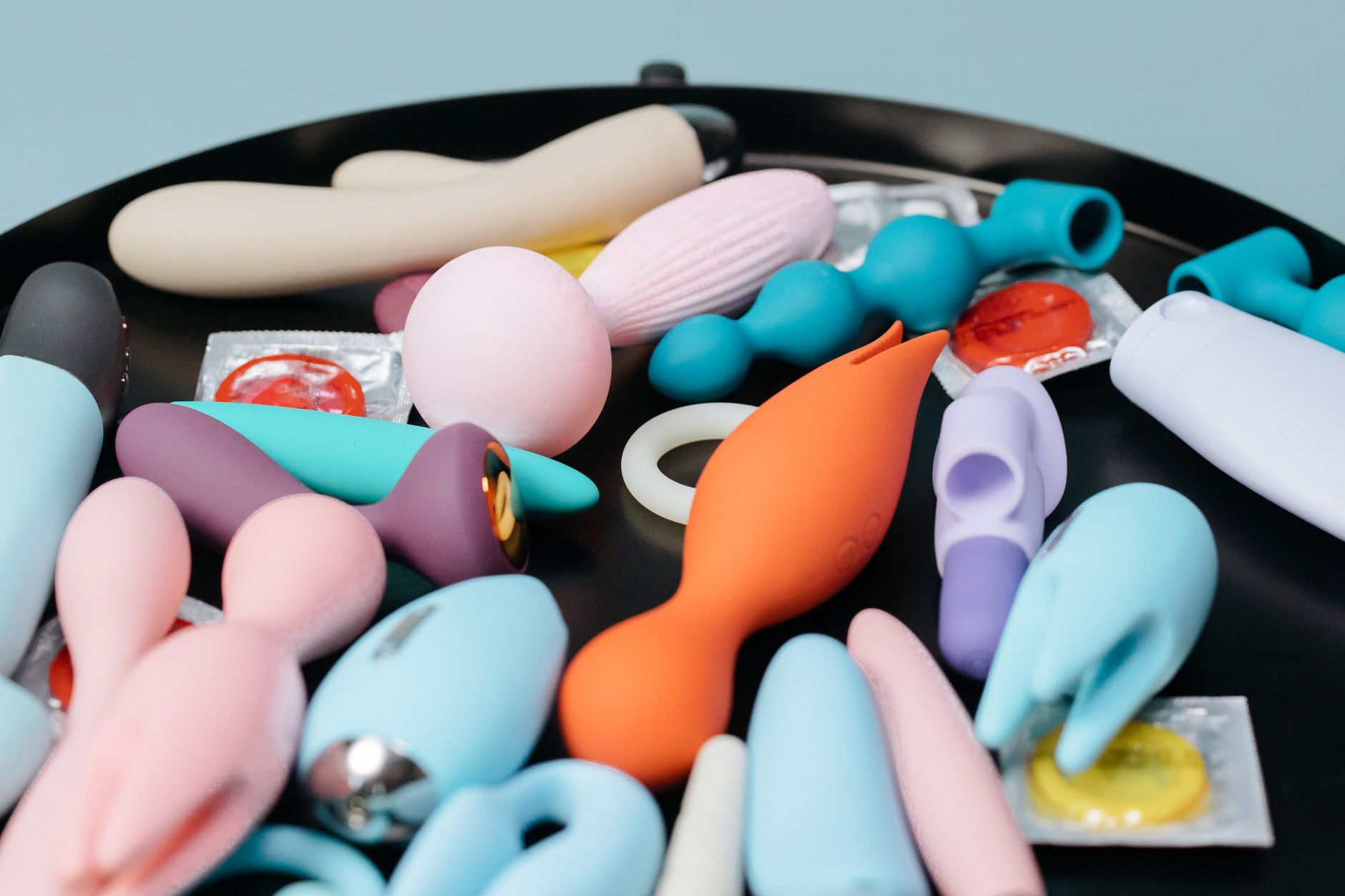
How to Use Lemon Vibrators When Hormonal Changes Affect Arousal Speed
Your body isn't broken. It's just moving slower. Here's why that happens, what it means for pleasure, and how lemon clitoral vibrators fit into your new arousal timeline.
Your body doesn't want to be touched the same way it used to. Not because something's wrong with you. Your hormones have shifted, and arousal now takes 20 or 30 minutes instead of 5. You might feel frustrated, like you're broken or less responsive. You're not. You're just working with a different neurochemical setup.
The good news? This is exactly where lemon vibrators get interesting. Because they don't rely on the rapid escalation your body used to need. They work differently. And when you understand how, slow arousal stops feeling like a barrier and starts feeling like permission to take your time.
Let's start with the science, because it matters. Arousal speed isn't one thing. It's a combination of hormonal baseline (estrogen, testosterone), blood flow capacity, neural sensitivity, and psychological state. When any of those shift, the whole timeline shifts with it.
This happens for a few reasons. Hormonal birth control recalibrates your baseline testosterone and estrogen levels. Natural hormonal fluctuations mid-cycle mean some days you're in a high-arousal window and others you're not. Perimenopause and menopause drop estrogen significantly, which thickens the vaginal wall slightly and changes how quickly blood flows to the clitoris. Stress and anxiety literally suppress the parasympathetic nervous system, which is the on-switch for arousal. So do certain medications, some health conditions, and even just getting older.
None of this means you've lost your capacity for pleasure. It means the pathway to get there has a different rhythm now.
Most vibrators assume you want to reach intensity fast. They're either too loud, too strong out of the gate, or they require constant adjustment to stay in the right zone. If your arousal is already moving slowly, fighting against a vibrator that wants to escalate quickly just creates friction.
Lemon clitoral vibrators work differently. The suction pattern starts gentle. You control the intensity. There's no pressure to build to a crescendo on anyone else's timeline. You can spend 10 minutes on pattern one, exploring what that feels like on your body. Then move to pattern two when you're ready. Or stay on one the entire time. There's no wrong answer.
This matters because slow arousal often comes with a side of anxiety. If you know you're taking longer, you might start watching the clock. You might worry you're holding your partner back. You might wonder if something's actually wrong. All of that tension lives in your nervous system and makes arousal even slower. Lemon vibrators remove that escalation pressure. You're not racing toward an endpoint. You're exploring what your body can do at each stage.
When arousal was fast, foreplay felt like a pit stop on the way to the main attraction. Now it is the main attraction. This is a mindset shift, not a limitation.
Start with your lemon vibrator on the lowest setting. Spend time just getting used to the sensation. If you're used to vibrators that hit hard immediately, this might feel underwhelming at first. That's the point. A lower-intensity pattern gives your nervous system time to register pleasure without overwhelming it. Your clitoris has thousands of nerve endings, and they don't all wake up at the same speed.
Make sure you're actually aroused before you start. This sounds obvious, but a lot of people jump to the toy before their body has had time to warm up. Read something that turns you on. Look at images. Touch yourself elsewhere. Get your heart rate up a bit. When blood is flowing to your genitals, your clitoris will respond more readily to the vibrator.
Then bring the lemon vibrator in. Not as the main event yet. As part of the warm-up. Some people find that using it for 5-10 minutes on a low setting before moving to higher intensities creates a smoother arousal arc.
This is worth saying clearly: taking longer to build arousal often means more intense orgasms. Not sometimes. Often. Your nervous system is getting a longer runway to build sensation and tension. That builds anticipation. That builds stronger releases.
I've worked with countless clients who initially felt frustrated by slower arousal and then realized, once they stopped fighting it, that their pleasure had actually deepened. They were more present. They were paying attention to smaller sensations. They weren't chasing the finish line.
Use your lemon vibrator as an anchor for this. Let it set the pace. Start low. Stay with one pattern until you feel ready to shift. Notice what your body is responding to, not just in terms of orgasm but in terms of the journey. Some people discover they prefer staying at a medium intensity the whole time rather than building to max. Others find that the slow build makes reaching max intensity feel completely different.
When arousal is moving slowly, your natural lubrication might be a little slower to show up too. This is especially true if hormonal changes are involved. Don't wait for your body to produce enough on its own. Use a water-based lubricant from the start.
This isn't a sign of failure. It's a sign that you're working with your body instead of against it. Lube makes the sensations more consistent. It takes the friction element out of the equation, which means you can focus purely on the pleasure signal your clitoris is sending to your brain.
Apply lube to your clitoris and the top of your vulva before you start using your lemon vibrator. Reapply as needed. Keep a small bottle nearby so you're not breaking your focus to search for it.
Your lemon vibrator works best as part of a consistent routine, not a sporadic tool. Here's why: your nervous system learns. If you bring your lemon clitoral vibrator into play in the same context repeatedly, your body starts to anticipate pleasure when it appears. That anticipation actually speeds up arousal over time, even if individual sessions take longer.
This might look like carving out 30-45 minutes once or twice a week specifically for yourself. You're not watching the clock during sex with a partner. You're not squeezing this in between work and dinner. You're actually creating space. Light a candle if that helps you mentally shift into the context. Put your phone in another room. Wear something that makes you feel good.
Start with your warm-up routine. Then introduce the lemon vibrator. Spend time exploring different patterns. Notice what your body responds to. Over a few weeks, you'll start to recognize your own arousal arc. You'll know whether you're a person who needs 15 minutes at low intensity before building up, or whether you prefer a longer time at medium. You'll figure out whether you like direct clitoral stimulation or prefer stimulation around the area.
This data is gold. It's your personal pleasure roadmap.
Slow arousal is common and normal. But if arousal has essentially disappeared, or if it's recently become much slower and you're also noticing other changes (mood, energy, pain), check in with a healthcare provider. Sometimes hormonal changes need medical support. Sometimes medications do affect arousal. Sometimes it's just a phase.
There's no shame in that conversation. A good provider can help you figure out whether you need hormone testing, whether a medication adjustment is worth exploring, or whether what you're experiencing is just the natural rhythm of your body right now.
In the meantime, lemon vibrators give you something to work with while you're figuring it out.
It could be a lot of things working together. Stress is a major one. Anxiety about performance actually suppresses arousal, which creates a catch-22. You worry you're taking too long, which makes you take longer. Sleep deprivation, changes in exercise, shifts in your relationship dynamic, or even just getting older all affect arousal speed. If it's a recent shift, check in with whether anything else in your life has changed first.
Not by forcing it faster, but by training your nervous system. Using your lemon clitoral vibrator consistently in the same context helps your body anticipate pleasure, which can reduce the time from neutral to aroused. But the goal isn't to rush back to your old timeline. It's to work with your current one and often discover it actually feels better.
There's no magic number. Some people need 3 minutes. Others need 15. Start with your intuition. If you find yourself getting bored or frustrated, it's probably too long. If you find yourself wanting more stimulation before you feel ready, you went too fast. Most people land somewhere between 5 and 10 minutes on a low setting before they're ready to explore higher intensities.
Not necessarily, and honestly sometimes solo exploration is more useful at first. When you're not worried about someone else's pace or pleasure, you can really get to know your own body's new timeline. Once you understand it, you can bring that knowledge into partnered sex. You can say, "I need about 20 minutes of warm-up before I'm ready for intensity," and mean it.
Not automatically. Arousal speed is separate from desire. You can deeply desire someone and still have slower arousal. You can have fast arousal and not actually want to be with that person. If you're questioning your attraction independent of timing, that's worth a separate conversation. But slow arousal on its own isn't a red flag about your relationship. As mentioned in our guide on how to use lemon vibrators when you have difficulty reaching orgasm with a partner, timing and attraction are two different systems.
Slow arousal is a timeline shift. You still get aroused. It just takes longer. Arousal problems that need medical attention usually involve difficulty getting aroused at all, pain during arousal, or a sudden dramatic shift. If you're still getting aroused, just more slowly, and it's not causing you physical pain, you're probably just working with a new timeline. But if you're unsure, your healthcare provider can help you sort it out.
I know it doesn't feel that way right now. When sex used to be spontaneous and now it requires planning, when your body moves slower than your mind expects, when you're wondering if something's wrong, it doesn't feel like an advantage. It feels like a setback.
But I've watched enough people work through this shift to know what comes next. Once you stop fighting the slower timeline and start working with it, pleasure deepens. Presence increases. Orgasms often become more intense because your nervous system has had more time to build. Your lemon vibrator becomes a tool not for rushing, but for actually arriving.
Start by accepting the pace. Then get curious about it. Your body is telling you something. Listen to what it's saying. The pleasure you build in that listening is often better than the rushed satisfaction you left behind.