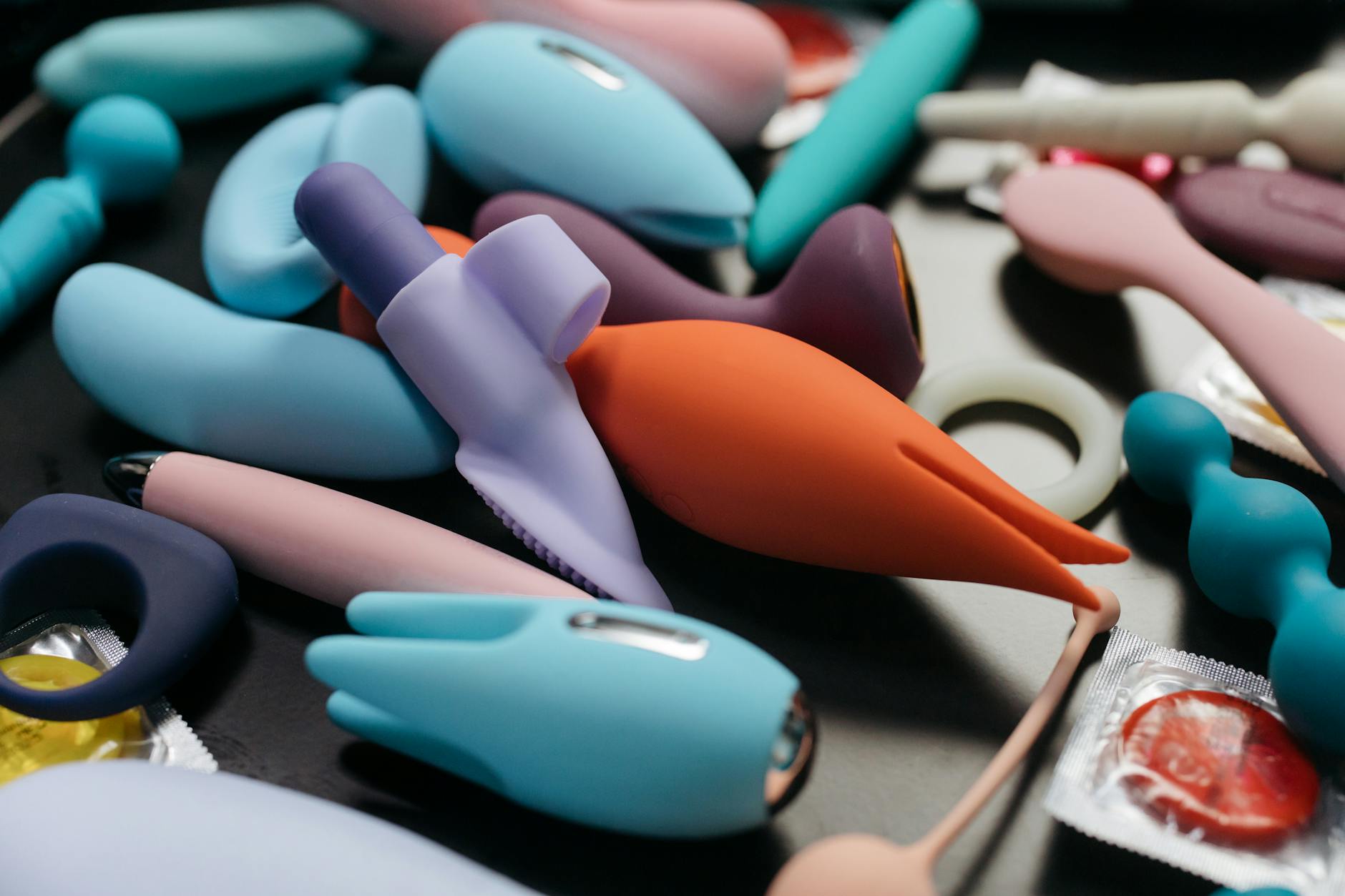
Here's what nobody warns you about with long-term sex
Sex doesn't end after five years or ten years. It just becomes mechanical. You both know what to expect, when to expect it, how long it takes. There's comfort in that, sure. But comfort and desire are not the same thing.
Routine is the slow death of wanting. And by wanting, I don't mean love. I mean actual physical hunger. The kind that makes you think about your partner during the day. The kind that makes touching feel like necessity, not obligation.
The good news: routine isn't permanent. It's just a pattern. And patterns break.
Why long-term couples fall into the autopilot trap
Here's the thing about relationships that last: they optimize themselves for efficiency. Life gets busy. Kids, work, stress, exhaustion. Sex becomes the slot you fill on Friday nights, same time, same moves. Your nervous system knows the script so well that desire doesn't even get a chance to build. Your brain is already planning tomorrow.
This is not laziness. This is what happens when predictability replaces discovery.
The research backs this up. Couples in long-term relationships report more satisfaction when they introduce novelty into their sex lives. Not because they're bored with each other, but because novelty creates arousal. Your brain needs the unfamiliar to trigger genuine desire.
Introducing lemon clitoral vibrators into your routine isn't about admitting failure. It's about choosing to interrupt the pattern on purpose.
Why lemon vibrators work for couples stuck in autopilot
A lemon vibrator does something your hand can't: it creates sensation that's entirely new. Even if you've had toys before, the specific feeling of suction combined with vibration changes the entire experience.
When something feels genuinely different, your nervous system wakes up. You can't phone it in. You're actually present because your body is responding to stimulation it hasn't learned to predict yet. That presence is desire.
For long-term partners, this resets the dynamic. If one of you has been initating while the other receives passively, a lemon vibrator changes who's in charge of pace. The sensation is stronger, which means attention has to shift. You're both noticing something happening that's not part of the usual sequence.
This isn't about the toy being "better" than hands. It's about the toy being foreign enough to matter.
The conversation you need to have first
Introducing a lemon sexual toy to a partner who expects Friday night to look exactly like it always has requires setup. Don't just produce the vibrator during sex. That's how you end up with hurt feelings and a toy that never gets used again.
Instead, have the conversation outside the bedroom. Over coffee, not at 10 p.m. when you're already undressing.
The script I use with couples:
"I've been thinking about our sex life. I love you, and I want us to feel more excited together. I found this toy that I think could be fun to explore with you. What do you think?"
Notice what that does: it names the thing you want (more excitement), clarifies your motive (you care about the us, not just the sensation), and invites collaboration instead of imposing.
If your partner pushes back, listen. "I don't need a toy to satisfy you" or "That feels like you're not attracted to me anymore" are real fears. Don't brush them aside. Instead, reframe:
"I'm not looking for something you can't give me. I'm looking for something we haven't tried together. That's different."
How to actually use a lemon vibrator when sex has felt routine
Start with exploration, not performance. Set aside a night where the goal is just trying it. Remove the pressure of orgasm or finishing. If neither of you comes, that's actually fine.
Before sex, spend time with the toy fully clothed if that feels less intense. Hold it. Turn it on at different settings. Let your partner see it's not a replacement, it's an addition.
When you do use it, start with external clitoral stimulation. For whoever has a vulva, the most reliable path to pleasure with a new sensation is giving the clitoris time to adjust. Start at the lowest setting. Let suction do the work. Don't jump to high intensity because you think that's what will feel good. Intensity is not the same as pleasure.
If you're the partner using the lemon vibrator on your partner, pay attention to their body more than usual. Watch for breathing changes. Listen for sounds. This is the novelty working: you're both paying attention again.
Here's what often happens next: one of you realizes the sensation is actually really different. And then desire follows. Not forced desire. Actual desire because something unexpected is happening in your body.
Why this resets the long-term dynamic
When a couple has been in autopilot, one or both partners often feel invisible during sex. The moves happen, the time passes, but nobody's really being looked at. A lemon vibrator fixes this accidentally. Because the sensation is new, you have to actually be present with each other.
You also get to see your partner experiencing something genuinely novel. If you've been together ten years, watching them respond to a new sensation feels a little bit like falling for them again. It's not romantic in a sentimental way. It's hot.
The other shift is permission. Using a lemon clitoral vibrator together gives you both permission to say out loud: "I want things to feel different." Once that door opens, you can talk about other things. Positions that feel stale. Timing that's gotten predictable. What you actually want, not what you've been settling for.
Common mistakes couples make when introducing vibrators
Mistake one: waiting for a special occasion. You don't need date night energy. Introduce it on a regular Tuesday. Routine doesn't get broken by waiting for the perfect moment.
Mistake two: using it the same way every time. If you introduce a lemon vibrator and then use it in exactly the position, for exactly the duration, every single time, you've just created a new routine. Change it. Different speeds. Different positions. Different moments in the session.
Mistake three: making it all about orgasm. This is huge. If the conversation becomes "Does this make you come faster?" you've missed the point entirely. The point is novelty. The point is presence. Orgasm might follow, or it might not. Both are fine.
Mistake four: one person being the sole enthusiast. If you're the one who wanted this and your partner is tolerating it, that's going to feel bad on both sides. Make sure both of you actually want to explore it, even if you want it for different reasons.
When routine has killed desire on one side
Sometimes one partner has drifted completely. They're not interested in sex anymore. A toy won't fix that by itself.
But it can be the first crack in a wall that's been solid for years. If you introduce something genuinely new, and your less-interested partner actually responds to it, that's the beginning of change.
I had a couple once. Married fifteen years. The husband had basically stopped initiating because his wife never seemed interested. The wife had stopped being interested because she was always tired and sex felt obligatory.
They introduced a lemon vibrator. Something about the novelty woke something up. Not fireworks. Just genuine curiosity. "Oh, that actually feels different." And that small amount of genuine response broke the pattern just enough that they both started wanting to try again.
Routine is a choice, even if it doesn't feel that way.
The real work happens after the toy
A lemon vibrator isn't a fix. It's a circuit breaker. It interrupts the pattern long enough for you to build something different.
After you've tried it a few times, have the next conversation. Not about the toy itself. About what you discovered. Maybe one of you learned you actually like clitoral focus more than penetration. Maybe you both realized you'd been ignoring foreplay. Maybe you found out that novelty actually matters to your body.
Use the toy to unlock information about what you both actually want, then build from there.
Long-term relationships need this kind of intentional disruption. Not because love fades. But because desire requires attention. And attention requires surprise.
FAQ: Lemon Vibrators and Long-Term Partnership
How often should we use a lemon vibrator to keep things interesting?
There's no magic number. Once a week, once a month, whenever you both feel like it. The point is mixing it in, not making it the main event every single time. Think of it like cooking. You don't make your favorite dish every night. You rotate. That's how you keep eating from feeling like fuel.
What if my partner thinks using a vibrator means I'm not satisfied with them?
This is a conversation worth having directly. Most of the time, that fear comes from feeling replaced. You can name that explicitly: "I'm not looking for something to replace you. I'm looking for something we can try together that's different from what we already do." The fact that you want to explore it together, not solo, matters. If they're still hesitant, you might explore what's underneath the fear. Often it's not about the toy. It's about feeling wanted.
Can a lemon clitoral vibrator help if we're mostly doing quickies?
Sort of. The issue with quickies is they don't leave time for arousal to build. A lemon vibrator can help speed things up, but if the real problem is lack of foreplay, no toy solves that alone. That requires both of you deciding foreplay matters. The vibrator just makes the foreplay feel less repetitive once you decide to have it.
What if one of us wants to use it more than the other?
Compromise. If you're enthusiastic and your partner is neutral, try it every other session for a while. Build comfort gradually. If one person wants it every single time and the other never, that's a mismatch worth discussing. You might find a middle ground. Or you might find out that desire shows up differently for each of you, and that's worth understanding.
Does using a lemon sexual toy together mean we need more toys later?
Not necessarily. Some couples fall in love with one toy and use it forever. Some explore others. Let curiosity lead, not pressure. The goal was to break the routine, not to collect toys. If one lemon vibrator does that, you're done.
How do we bring this up without making it awkward?
Do it outside the bedroom, when you're not already naked or in the mood. Keep it simple. "I found this and I think it could be fun to try together." If it's awkward, that's okay. Awkward means you're talking about something real. Awkward passes. Routine doesn't, not without intervention.