
Let's name the thing nobody talks about
You want sex more often than your partner does. Or they travel. Or work nights. Or you're in different life phases. The gap between your desire and actual availability is real, it's common, and it's not a relationship failure. It's just logistics that nobody prepared you for.
Here's what I see in my practice: couples often treat this mismatch as something to "fix" in the relationship, when what they actually need is to understand it's a separate problem with a separate solution. Your solo pleasure isn't competing with your partnership. It's supporting it.
Why lemon vibrators work for this specific situation
Three things make lemon clitoral vibrators like the Lem particularly useful when you have high desire but limited partner availability.
First, they're fast. A good lemon vibrator, especially air-suction models, can bring you to orgasm in 5 to 15 minutes. You're not waiting for a partner's schedule or building toward a partnered experience. You're meeting your own need efficiently.
Second, they're precise. Unlike partnered sex (which requires negotiation, rhythm, feedback), solo play with a clitoral vibrator is entirely under your control. You set the intensity, the speed, the duration. No compromise. That autonomy actually reduces resentment over time.
Third, they maintain your sense of yourself as a sexual person. When desire goes unmet for weeks, you start to internalize the gap. You stop initiating. You assume there's something wrong with wanting sex. A lemon vibrator reminds you that your sexuality is real and legitimate, regardless of your partner's timeline.
Setting up solo play that doesn't feel like settling
The mental shift matters here. Solo play isn't a consolation prize. It's not something you do "instead" of partnered sex. It's a different form of pleasure, with its own benefits.
Start by separating the two conversations in your head. When you're using a lemon vibrator solo, you're not wishing you had a partner. You're doing something specific for yourself. That's the whole point.
Second, create actual space for it. Not hiding in the bathroom for five minutes. I mean blocking out 20 or 30 minutes, dimming lights, maybe putting your phone away. The physical setup signals to your brain that this is real time, not stolen time. You deserve deliberate pleasure.
Third, experiment with the settings. Most lemon vibrators have multiple patterns and intensity levels. Solo play is where you discover what actually feels good to you, without the pressure of performing or adjusting for someone else. That knowledge is valuable in any partnered sex later.
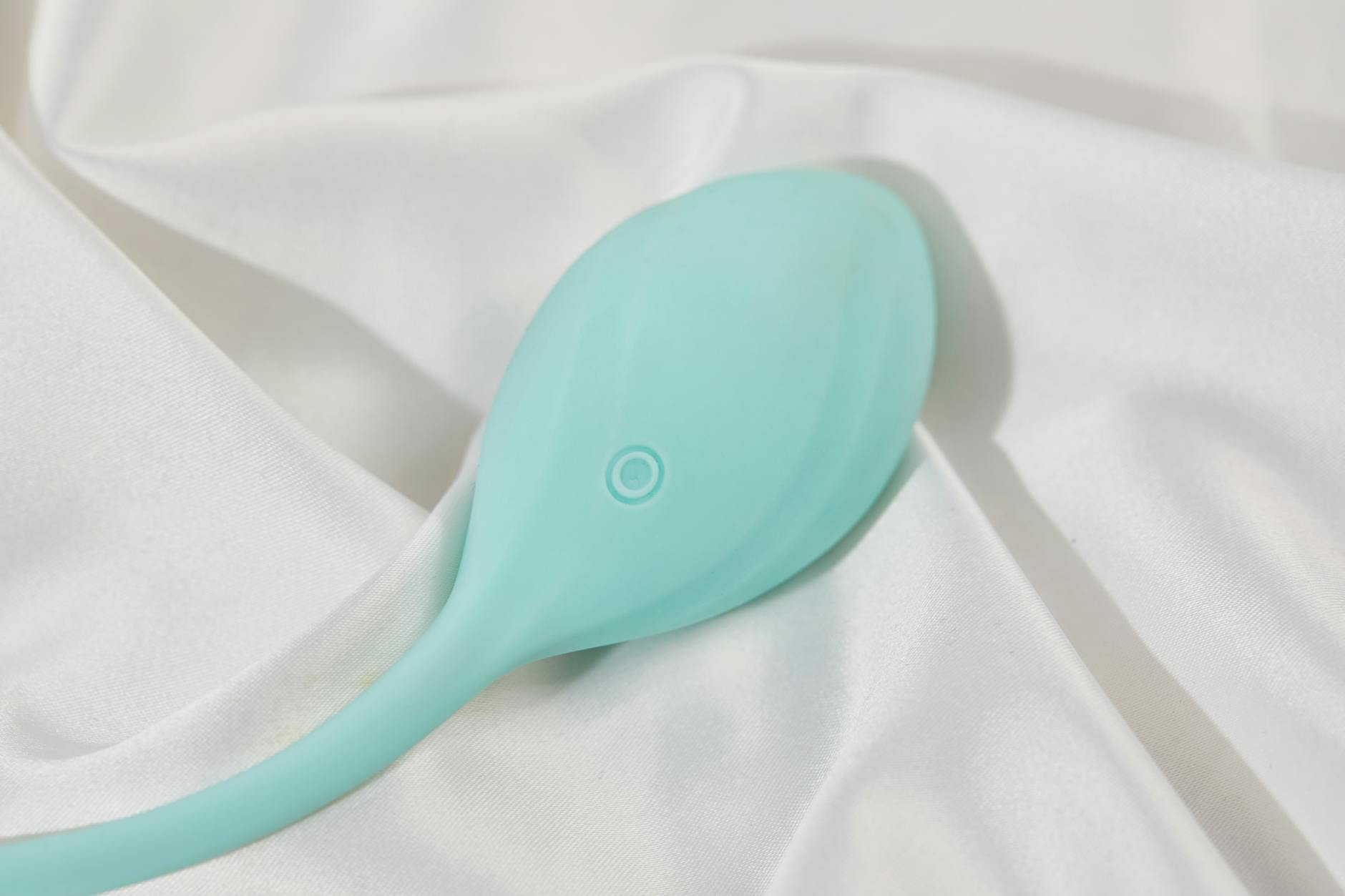
Photo by IFONNX Toys on Pexels
The rhythm that actually works
When you have ongoing desire mismatch with a partner, consistency matters more than frequency. Using a lemon vibrator twice a week at a predictable time (maybe Sunday morning, or Thursday evening) is better than sporadic use driven by desperation.
Why? Because your nervous system needs to know it's been cared for. You're not white-knuckling through the week until your partner is available. You have a regular appointment with your own pleasure. That shifts something psychologically. The resentment softens.
If your partner travels a lot, this becomes even more practical. Build a simple routine: evening wind-down, clitoral vibrator, solo orgasm, sleep. You're maintaining sexual activation instead of letting it hibernate for weeks. That continuity protects your capacity for pleasure and keeps you from returning to partnered sex in a state of total deprivation (which, honestly, makes everything harder).
How this actually affects your partnership
Here's the counterintuitive part: couples who integrate solo play tend to have better partnered sex, not worse. You're not competing for the same resource. You're each maintaining your own sexual baseline.
Second, you stop resenting your partner for not wanting sex as often. They stop feeling pressured. The charge around "you never want me" softens because you're not entirely dependent on their availability for sexual release. Solo play is your solution to your need. Your partner's lower desire isn't now a personal rejection.
Third, when you and your partner do have sex, it's often better. You're not desperate. You're not resentful. You're approaching it from a place of already-satisfied desire, which is a completely different energetic.
That said, this only works if there's actual communication. You're not hiding in another room using a lemon vibrator and pretending it doesn't exist. You're comfortable saying, "I'm going to have some solo time tonight," the same way you'd say you're going to the gym. The ease normalizes it.
When to check in with your partner about this
Some partners will immediately get it. Others will feel threatened or left out. Both are valid starting points, but they require different conversations.
If your partner feels left out, that's worth exploring. Sometimes it's insecurity ("Am I not enough?"), sometimes it's FOMO ("Why didn't you ask me first?"), sometimes it's genuine curiosity. Have that conversation outside the bedroom, and ideally not when you're midway through a solo session.
You might say something like: "I've realized I have more sexual need than you do, and I want to solve that without making you feel pressured. Solo play with a vibrator helps me stay in touch with my own pleasure. It's not replacing you. It's filling the gap between your need and mine."
Some partners, once they understand the frame, actually find it hot. Some are neutral. Some remain uncomfortable. That's data too, and worth understanding.
How lemon vibrators specifically help with desire management
Lemon clitoral vibrators are particularly good for this because they work differently than partnered clitoral stimulation. The suction sensation is unique. It's not something a partner typically provides, so it doesn't feel like you're getting a "second-best" version of partnered sex.
You're getting a specific pleasure that stands on its own. That's important psychologically. You're not comparing it to partnered sex and finding it lacking. You're experiencing something different and valuable.
The Lem or other lemon suckers are also reliable. They work the same way every time, which matters when you're trying to build a predictable routine. You know what to expect. That consistency is grounding.
The practical logistics nobody mentions
If you have kids, roommates, or thin walls, this is a reality check. Solo play requires actual privacy and probably some sound management. That's not a reason to skip it. It's just logistics to solve.
Maybe it's early morning before the house wakes up. Maybe it's during your lunch break in your car. Maybe it's when your partner takes the kids to soccer. The when doesn't matter as much as the fact that it's regular and protected.
Second, keep your lemon vibrator charged and accessible. Dead battery at the moment you actually have time is demoralizing. If it takes two hours to charge, you lose spontaneity.
Third, clean it between uses with toy cleaner or warm soapy water. That's basic hygiene, but it also signals to yourself that this is something you take care of intentionally. Not rushed. Not hidden.
When solo play isn't enough (and what that means)
If you're using a lemon vibrator regularly but still feeling resentful, disconnected, or like your partnership is breaking under the weight of desire mismatch, that's worth a conversation with a couples therapist.
Solo play is a piece, not a fix. It helps you meet your own needs and reduces resentment. But if the gap is so large that even that doesn't help, the actual issue might be compatibility, burnout, or something else entirely. That conversation needs both of you.
Honestly though, in my experience, when one partner starts using a vibrator regularly without shame, the whole dynamic shifts. Less desperation. More self-respect. More room for real conversation about what you both actually want.
FAQ: Solo pleasure and partnerships
Is using a vibrator alone a sign my partner isn't enough?
No. Your desire and your partner's desire are different numbers. Neither is wrong. A vibrator is a tool that lets you meet your own need instead of making your partner responsible for something they can't provide on your timeline. That's actually honoring the relationship.
Will my partner feel replaced if I tell them I'm using a lemon vibrator?
Some do initially, until they understand the frame. The way you talk about it matters. "I want to add this to my life," not "I need this because you're not enough." Most partners, once they see the relief and confidence it brings, actually appreciate the shift.
How often is too often for solo play?
There's no number. Once a week, five times a week, once a month. Whatever fits your life and keeps you feeling like yourself. The only guideline: if it's replacing all partnered sex or if you're choosing it instead of connecting with your partner, that's worth examining.
What if I feel guilty using a lemon vibrator when my partner has lower desire?
That guilt often comes from the belief that your pleasure should depend on your partner's availability. It shouldn't. You're allowed to take care of yourself. That's not betrayal. That's self-respect.
Does solo play affect my ability to orgasm with a partner?
For some people, yes. Clitoral vibrators are very efficient, and some people's bodies get used to that intensity level. If that happens, you can dial back solo play intensity or frequency, or explore different types of stimulation. But for most people, solo play and partnered pleasure coexist fine.
Should I hide my lemon vibrator, or keep it visible?
That depends on your living situation and your partner's comfort. If you're comfortable with it and they are, keeping it visible normalizes it. If privacy matters for other reasons (kids, roommates), that's fair too. Just don't hide it as a source of shame. That energy lingers.
The real payoff
When you stop treating solo pleasure as a problem to solve and start treating it as a legitimate part of how you care for yourself, something shifts. You feel less desperate. More grounded. More like yourself. Your partnership actually improves because you're not running on empty, waiting for your partner to meet a need they can't.
A lemon clitoral vibrator isn't a fix for desire mismatch. But it's a tool that lets you stop seeing your high sex drive as a burden and start seeing it as part of who you are. That confidence, that self-respect, that's what changes relationships.