Let's talk about the gap between medical clearance and actually feeling ready
Your doctor said you're good to go. Your body is healing. But somewhere between "it's safe now" and actually touching your partner, something feels off. Maybe there's fear. Maybe there's numbness where sensation used to live. Maybe you're terrified that wanting sex again means you're not as sick anymore, which somehow feels like admitting something you're not ready to admit.
This gap is real, it's normal, and it's exactly where lemon vibrators become genuinely useful.
Why returning to sex after a health crisis isn't just physical
Here's what happens. A health scare yanks you out of your body. Surgery, illness, medication, hospitalization. Your body becomes something that needs managing instead of something you inhabit. Then healing starts, and somewhere in that process you're supposed to suddenly flip a switch and feel sexy again. Except the wiring got scrambled.
Physically, things might be fine. Your doctor cleared you. But psychologically and sensorially, you're standing at the edge of a pool you used to swim in and it looks unfamiliar. That's not a sign something is wrong. It's a sign you need to wade in slowly.
Lemon clitoral vibrators help bridge that gap because they make the entry point smaller and more controllable. You're not trying to recreate what sex used to feel like. You're starting from zero and building something new that fits where you are right now.
Rebuilding sensation after your body has been through trauma
Illness and medical treatment can numb sensation in unexpected ways. Sometimes it's medication side effects. Sometimes your nervous system got stuck in protection mode and hasn't fully switched back. Sometimes you're so in your head about what your body has been through that you can't land in the physical experience.
Lemon vibrators work well here because suction-based stimulation wakes up nerve endings without requiring direct pressure. If your body is in a defensive state, intense vibration can feel invasive. Suction feels more like invitation than intrusion.
Start at the lowest setting. The goal isn't orgasm on day one. The goal is sensation. Notice what you feel. Does it feel pleasurable? Neutral? Uncomfortable? All of those are fine answers. You're mapping the territory again.
The psychological permission piece
One thing I see with clients rebuilding intimacy after health scares is guilt masquerading as caution. "It's too soon." "I shouldn't want this yet." "My partner should just be happy I'm alive." These thoughts are protective, but they also build a wall between you and pleasure.
Using a lemon vibrator solo first gives you permission to explore without anyone else's timeline. You're not doing it for your partner. You're not proving you're "better." You're taking back your body on your own schedule. That's the foundation everything else builds on.
Let yourself feel selfish about this. Your pleasure matters. It matters especially right now, when your nervous system is learning to trust sensation again.
How to pace the return to partnered intimacy
If you're in a relationship, sex might involve another person. That's when the stakes feel higher. You don't want to disappoint them. You worry about your body's response. You're carrying their adjustment too.
Here's what helps: tell your partner you're using a lemon vibrator as part of your personal healing process, and that it's not about them. If they're invited into that experience, great. If not, that's also fine. Some people need solo reclamation time before they can be vulnerable with someone else.
If they join you, a lemon clitoral vibrator actually takes pressure off your partner. They're not responsible for getting you there. The device does. They get to be present and supportive instead of performative. That's a healthier dynamic for everyone.
When touch itself feels overwhelming
After certain health experiences, even gentle touch can feel intolerable. Your body has a heightened startle response. You need consent and control. A lemon vibrator respects that completely. You control the pressure, the duration, the intensity. Your partner can hold you while you use it, or you can be alone. You're setting every boundary.
As your nervous system settles, sensation often opens up. It's gradual. It's not linear. Some days you'll feel more connected. Some days you'll feel further away. That's not failure. That's healing.
Rebuilding desire, not faking it
The pressure to want sex again is real and completely unhelpful. After health trauma, desire doesn't snap back like a light switch. It creeps back. Sometimes it shows up differently than before. Maybe you need more buildup time. Maybe you prefer different positions. Maybe what turned you on before feels weirdly triggering now.
A lemon vibrator is useful here because it separates desire from performance. You don't have to want sex to explore sensation. You can play around and let desire build in the background. Sometimes playing with a vibrator for ten minutes with zero expectation of orgasm is the exact thing that reminds your body that pleasure is still available.

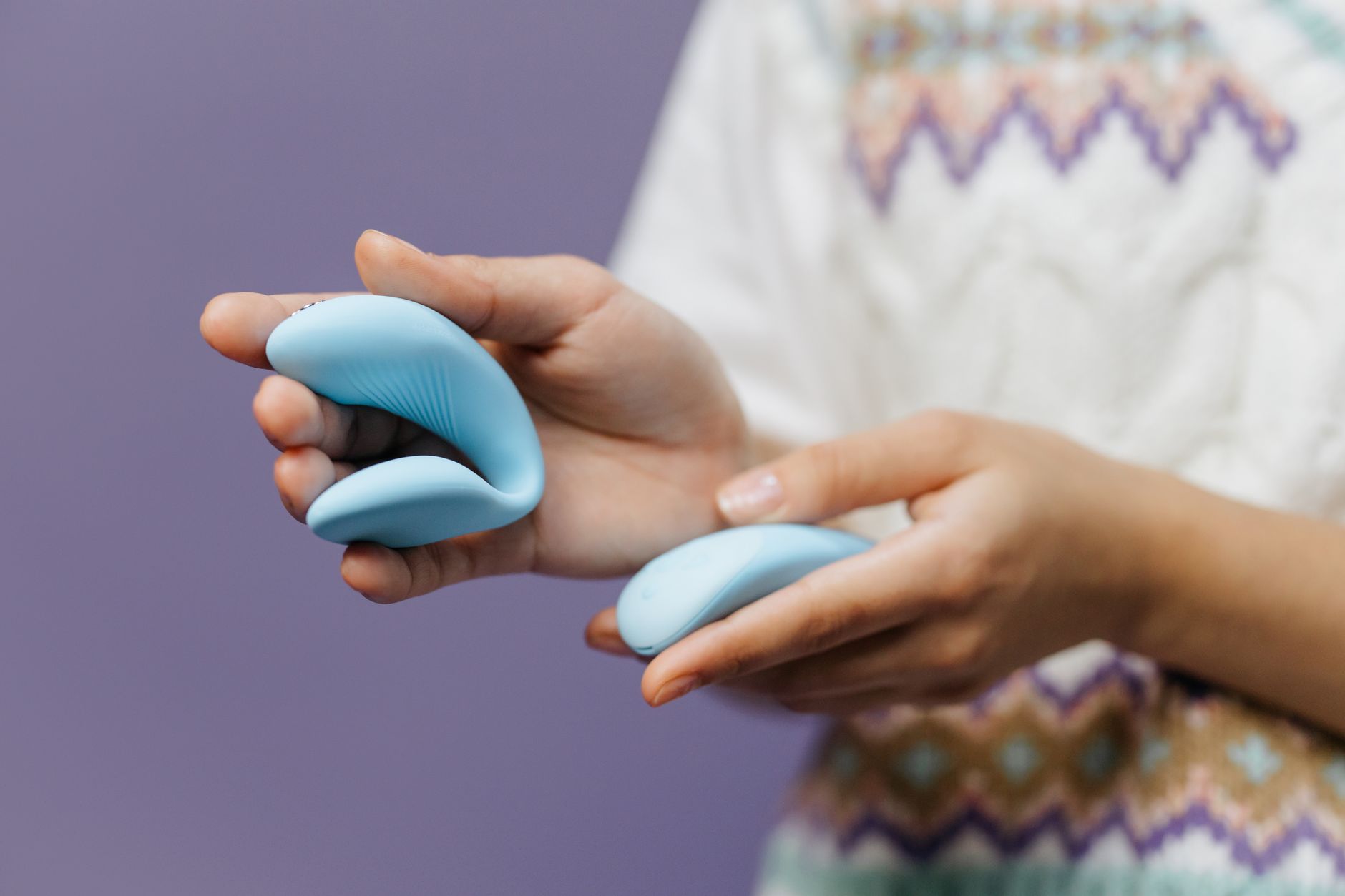
Photo by Ihsan Adityawarman on Pexels
Setting expectations that actually help
Here are the realistic benchmarks for returning to intimacy after a health scare:
Week one. Solo exploration only. A lemon vibrator, a quiet space, no agenda. Ten minutes. You're reacquainting yourself with sensation. Orgasm is optional.
Weeks two to three. More frequent solo exploration if it feels good. Start noticing what settings feel best. What time of day works. Whether you prefer stimulation that builds slowly or something more direct.
Week four and beyond. If you have a partner and feel ready, invite them into the experience. Not necessarily into bed. Maybe they're just present in the room. Maybe they hold you. Maybe they eventually use the vibrator on you. You're building tolerance for vulnerability.
This timeline isn't a prescription. It's a general shape. Your actual timeline depends on what your health scare was, how your body is healing, what your nervous system needs.
When pain shows up and what to do
If physical pain appears during or after using a lemon vibrator, stop immediately. Pain is information. It doesn't mean something is broken. It means your body needs something different.
Common culprits: pressure is too intense, you're tensing muscles that haven't healed fully, you need more lubrication, your positioning puts strain on a healing area. All of those are fixable. Less intensity, water-based lubricant, different positioning, longer warm-up time.
If pain persists, check in with your doctor. Sometimes scar tissue needs attention. Sometimes nerve sensitivity takes longer to normalize. That's not a setback. It's just part of the process.
Talking to your partner if you're struggling
If you're partnered and intimacy after your health scare feels awkward or stuck, naming it helps. "I'm having trouble reconnecting with my body." "I need to move slower than I expected." "I need you to not take it personally if I shut down."
Your partner probably wants to help and doesn't know how. A lemon vibrator gives them a concrete tool. They can be present while you explore. They can see that you're working on this. They can feel useful instead of helpless.
If your partner responds poorly to the idea of a sex toy, that's a separate conversation worth having. You can reference guides on that separately, but know that you're allowed to do this with or without their enthusiasm. Your recovery is not negotiable.
The shift from "getting back to normal" to building something better
Most people go into recovery assuming they'll return to how sex was before. That's rarely what happens. What usually happens is you rebuild something different. Maybe better. Maybe just different, which is enough.
A lemon vibrator is part of that rebuild because it's not trying to replicate partnered sex. It's its own experience. It's a way to say to your body: "You're safe now. Sensation is available again. We can take our time."
That permission matters more than the device itself. But the device makes the permission easier to believe.
People also ask
How long after medical clearance should I wait before using a vibrator?
Every health situation is different. If your doctor said no penetration or no sexual activity for a specific period, follow that guidance. A lemon clitoral vibrator doesn't involve penetration, but stimulation still increases blood flow and can put gentle pressure on healing tissue. Check with your doctor about the specific type of stimulation they're clearing you for, and err on the side of caution. Starting a week or two after you feel physically ready is usually safe, but confirm with your healthcare provider about your particular situation.
Can using a lemon vibrator help me reconnect with sensation if medication has made me numb?
Yes, but not instantly. Medication-induced numbness takes time to reverse, and sometimes it doesn't fully reverse. A lemon clitoral vibrator can help wake up nerve endings because suction-based stimulation is gentler than direct vibration and often more effective at recruiting sensation. The key is consistent but low-pressure exploration over weeks, not daily intensive use. If numbness persists after months, talk to your doctor about whether adjusting medication timing or dosage is possible.
What if I feel guilty about wanting pleasure while I'm still technically healing?
That guilt is incredibly common and worth examining. Pleasure isn't frivolous. It's evidence that your nervous system is healing. It's your body telling you it feels safe enough to want things again. That's a good sign. The guilt usually comes from a belief that healing should be serious and self-denial, but recovery actually benefits from positive sensation and the autonomic nervous system downregulation that pleasure provides. Using a lemon vibrator is part of healing, not a distraction from it.
Can my partner and I use a lemon vibrator together as we rebuild intimacy?
Absolutely. In fact, it can reduce pressure on both of you. Your partner doesn't have to be responsible for your arousal or orgasm. You get to focus on sensation and rebuilding trust in your body. They get to be supportive without performing. The vibrator becomes a third presence that's just there to help, not a threat. Start with you in control, using it on yourself while they're present. As comfort builds, you can experiment with them using it on you.
How do I know if I'm pushing too hard versus moving too slowly?
If you're experiencing pain, you're pushing too hard. Back off intensity and duration. If you're experiencing numbness or disconnection, you might be in avoidance mode, which is also normal. Give yourself permission to be bored or neutral about sensation for a while. The feeling often returns when pressure is removed. If nothing changes after a month of regular gentle exploration, that's worth discussing with your doctor. But in the first weeks and months, slowly and gently is almost never the wrong pace.
What if my partner isn't comfortable with me using a vibrator?
That's a conversation to have directly. Often discomfort comes from insecurity or misunderstanding. When you explain that you're using it for your own healing and recovery, not as a replacement for them, many partners become more open. If they remain resistant, you can use it privately, which is also completely valid. Your healing doesn't require their approval. It does benefit from their support, but those are separate things.
Coming back to your body after a health scare is one of the most vulnerable things you'll do. A lemon vibrator is just a tool, but it's a tool that says to yourself and to your nervous system: "I'm allowed to feel good again. I'm allowed to take my time. I'm allowed to rebuild this on my own terms."
That permission is where healing accelerates. If you're ready to explore that next step, start small, go slow, and give yourself grace. Your body remembers pleasure. It just needs a gentle invitation to come home.
Have questions about your specific situation or need guidance on how to talk to your partner? Reach out to us at /contact.