The slow burn is not a problem
Let's be real. If you need 20, 30, or 45 minutes to get genuinely aroused, you're not broken. You're not high-maintenance. You're just operating on a different timeline than the highlight reel suggests. And the bonus? That slower ramp-up often leads to deeper, more sustained pleasure than the quick-spike version.
The trouble starts when you're operating in a world built for the five-minute climax. Partners expect you to match their pace. You start second-guessing whether something's wrong with you. You reach for the strongest stimulation too early because you think intensity will speed things up. It rarely does. What actually works is giving your body permission to move at its own pace.
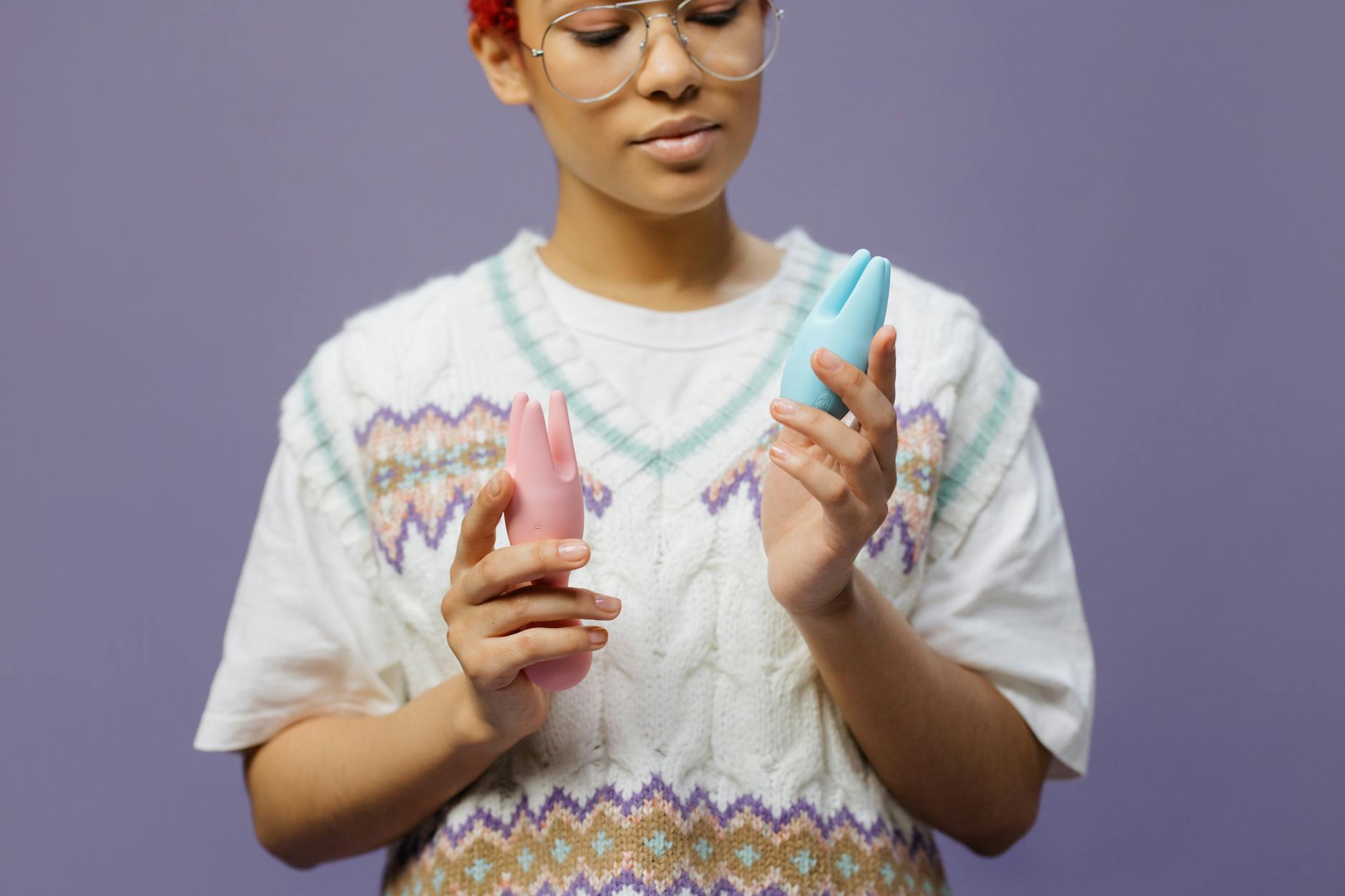
With lemon vibrators and a smart approach to timing, slow arousal becomes an advantage, not a roadblock.
Understanding your actual arousal curve
Arousal isn't a switch. It's a ramp with a slope unique to your body. Some people's slope is steep (five to ten minutes). Others are more like a gradual incline (25 to 40 minutes). Neither is better. Both are normal.
What matters is knowing your own curve. This usually means paying attention across several sessions to notice: How long does mental interest usually take? When does your body start responding physically? At what point does sensation start feeling intense rather than just pleasant? When do you usually reach orgasm from that starting point?
If you're not sure, spend a solo session or two just noticing without any goal. No timer, no pressure to finish. Just attention. Most people discover their timeline becomes clearer after two or three sessions of simple observation.
Why lemon vibrators work differently for slow arousal
Traditional vibrators rely on intensity. They go fast from the start. For slow arousers, this can feel jarring or even uncomfortable early on because the tissue isn't engorged, sensitivity isn't fully engaged, and your nervous system isn't ready for that level of stimulation.
Lemon vibrators, including the Lem, use suction and pulsing instead of raw vibration. This matters because suction stimulates the nerves without the same intensity pressure. You get sensation without overwhelm. You can start at pattern one and stay there for as long as you need. The experience deepens gradually instead of starting at peak.
This slower approach to clitoral stimulation aligns naturally with slow arousal. You're not fighting your body's timeline. You're supporting it.
The practical timeline structure that works
Instead of one big block of time, split your experience into phases. Each phase has a different job.
Phase one: Mental transition (5-10 minutes). Put your phone away. Change rooms if you need to. Light a candle. Listen to a playlist. Do whatever shifts your brain from "work mode" to "me time." This isn't wasting time. This is doing the work your nervous system needs.
Phase two: Early touching (5-15 minutes). Touch yourself in ways that feel good but aren't the main event. Chest, neck, thighs, breasts. Slow hand movement. Kissing your own arm if that helps. This builds arousal signals in your body without jumping straight to the thing you're trying to finish.
Phase three: Gentle introduction (5-10 minutes). Bring in your lemon clitoral vibrator at pattern one. No rushing, no goal of orgasm yet. Just sensation. You might notice a difference in about two minutes, or it might take eight. Neither is wrong. This phase is about finding the pace where your body starts genuinely responding.
Phase four: Building (10-20+ minutes). Stay where you are, or move to the next pattern if you want. This is where arousal actually deepens. Numbness fades. Sensation gets sharper. Your body's responses intensify. Some people move through this quickly. Others need the full 20 minutes. That's where your personal timeline shows up.
Phase five: Intensity and finish (5-15 minutes). Now you can move to higher patterns on your Lem vibrator if you want. Or stay where you are. This is the part where you have momentum, where your body is ready.
What changes when there's a partner involved
Slow arousal gets trickier with another person because their timeline might be different. Here's what actually helps:
Separate the timelines. You don't have to sync up. Your partner can be present without needing the same ramp-up. This sounds obvious but it's genuinely revolutionary when you try it. They can read next to you. Play on their phone quietly. Warm you up, then step back for a few minutes. Whatever keeps them engaged without needing you to hurry.
Talk about it before, not during. "I usually need about 25 minutes to feel really turned on" is a conversation for over coffee, not in the middle of sex. This removes real-time negotiation and pressure. It becomes simply information.
Use the Lem as a bridge. Some partners feel self-conscious during the waiting period. A lemon vibrator gives you both something to do. Your partner might use it on you. You might use it on yourself while they're kissing your neck. You're moving through the timeline together without syncing.
Common timing mistakes with slow arousal
Jumping to intensity too early. You haven't hit maximum sensitivity yet, so high-intensity patterns feel harsh instead of good. Stick with patterns one through three for the first ten to fifteen minutes, whatever your actual arousal pattern is.
Setting a "finish time" goal. The moment you decide "I should orgasm in 30 minutes," you've shifted from arousal to performance. Slow arousal responds best when you remove the deadline entirely. Open-ended pleasure beats timed pressure every single time.
Treating warm-up as something to skip. You're not being slow. You're being thorough. Mental transition, hand touching, gentle introduction. These aren't obstacles. They're the actual experience.
Using the wrong lubrication or none. Slow arousal sometimes comes with slower lubrication. Water-based lube helps tremendously, especially with suction-based toys. It's not a sign something's wrong. It's just part of your design.
Feeling weird about the length of your own timeline. You're not high-maintenance. You're not broken. You just need what you need. The right partner and the right toys (like a lemon vibrator designed for slower, more nuanced stimulation) make this feel like a feature, not a bug.
How to talk about this with a new partner
Early in dating or a new sexual connection, you might feel pressure to seem "easy" or "ready." You're not. And you shouldn't pretend to be.
Simple version: "I usually need about 20 to 30 minutes of foreplay before I'm fully into it. That's just how my body works. It doesn't mean I'm not into you. It just means we'll have a longer warm-up than a quickie." Most partners find this information useful, not off-putting.
If someone responds with impatience or makes you feel bad about your timeline, that's information too. You're not the problem. The mismatch might be.
The arousal window concept
Slow arousers often find they have a specific "sweet spot" window. Before that window, arousal builds slowly. After a certain point, if you've been going too long without success, your nervous system can actually downshift. Learning your own window helps.
For some, it's 20-40 minutes. For others, it's 40-60. Some people find that if more than 75 minutes passes without orgasm, their body actually gets frustrated and resets.
This isn't weakness. It's just how your particular nervous system sequences. Once you know your window, you can structure sessions around it instead of against it.
Using patterns strategically on your lem vibrator
If you're using a suction-based lemon clitoral vibrator like the Lem, the patterns themselves matter when you have slow arousal.
Patterns one and two: Rhythmic, gentle. Perfect for the first 10-15 minutes when you're still building. They create sensation without overwhelming newly-sensitive tissue. This is where most slow arousers should spend significant time.
Patterns three and four: Moderate intensity with some variation. Introduction patterns once arousal has a baseline. You're deeper into sensation, but not peak yet.
Patterns five and beyond: High intensity and variation. Use these once your body is genuinely ready, not as a shortcut to get there faster.
Most slow arousers find they don't actually need the highest patterns. The pleasure is richer and the orgasm often deeper when you stay in the medium range and take your time.
Quick-reference timing checklist
Before a solo session: Ten minutes to transition mentally. Fifteen minutes of warm-up touching. Five minutes of gentle introduction. Then let it develop.
With a partner: Talk about timeline expectations beforehand. Agree on "we have 45 minutes and no deadline within that." Use foreplay and your lemon vibrator as the experience, not as appetizer to something else.
Troubleshooting slow progress: Are you mentally checked in? Is there lube involved? Are you in a place where you actually feel safe? If yes to all three, give it another five minutes. Arousal curves aren't linear. There are plateaus. That's normal.
People also ask
Is it normal to need 30 minutes to get aroused?
Completely normal. Arousal timelines vary widely based on your nervous system, stress levels, medication, relationship dynamic, and just basic neurology. People with vulvas especially tend to have longer arousal ramps than media suggests. Thirty minutes isn't excessive or broken. It's your actual body doing its job.
Can lemon vibrators help me speed up my arousal?
Not exactly speed it up, but work with it more effectively. A suction-based lemon clitoral vibrator like the Lem provides sensation that feels better early in arousal rather than harsh. This means you're more likely to stay engaged and let arousal deepen naturally instead of starting with intensity that feels uncomfortable.
What if my partner gets bored during my warm-up time?
That's their work, not yours. You're not responsible for managing their patience. That said, partners can stay engaged by helping with touch, using a vibrator on you, kissing you, or yes, reading a book nearby. The point is you're together, not that you're both performing every second.
Does medication affect arousal timing?
Yes. Antidepressants, blood pressure meds, antihistamines, and others can lengthen arousal time or reduce sensation. This doesn't mean you're broken. It means you might need more time, different stimulation, or both. Worth discussing with your doctor if this shift is new.
Can I use a lemon vibrator from the very start of sex?
Absolutely. You don't have to build up to it. Some people find bringing in a lemon clitoral vibrator early helps them get a baseline of sensation, which actually speeds the overall arousal curve. Experiment and see what your body prefers.
What if I still can't get aroused even after a long warm-up?
Slow arousal is normal. No arousal after significant effort might signal stress, relationship tension, medication side effects, or just not being in the mood that day. Solo versus partnered arousal can also feel completely different. If this is a persistent shift from your baseline, it's worth checking in with a therapist or doctor to rule out underlying factors.
Your timeline is valid
Slow arousal isn't a barrier to amazing sex. It's just your particular neurology. With how to use lemon vibrators when clitoral stimulation feels too intense and the right pacing, you can build toward orgasms that feel deeper and more satisfying than the rushed versions.
The real skill isn't speeding yourself up. It's building a sex life that honors your timeline instead of fighting it. That's where the actual pleasure lives.