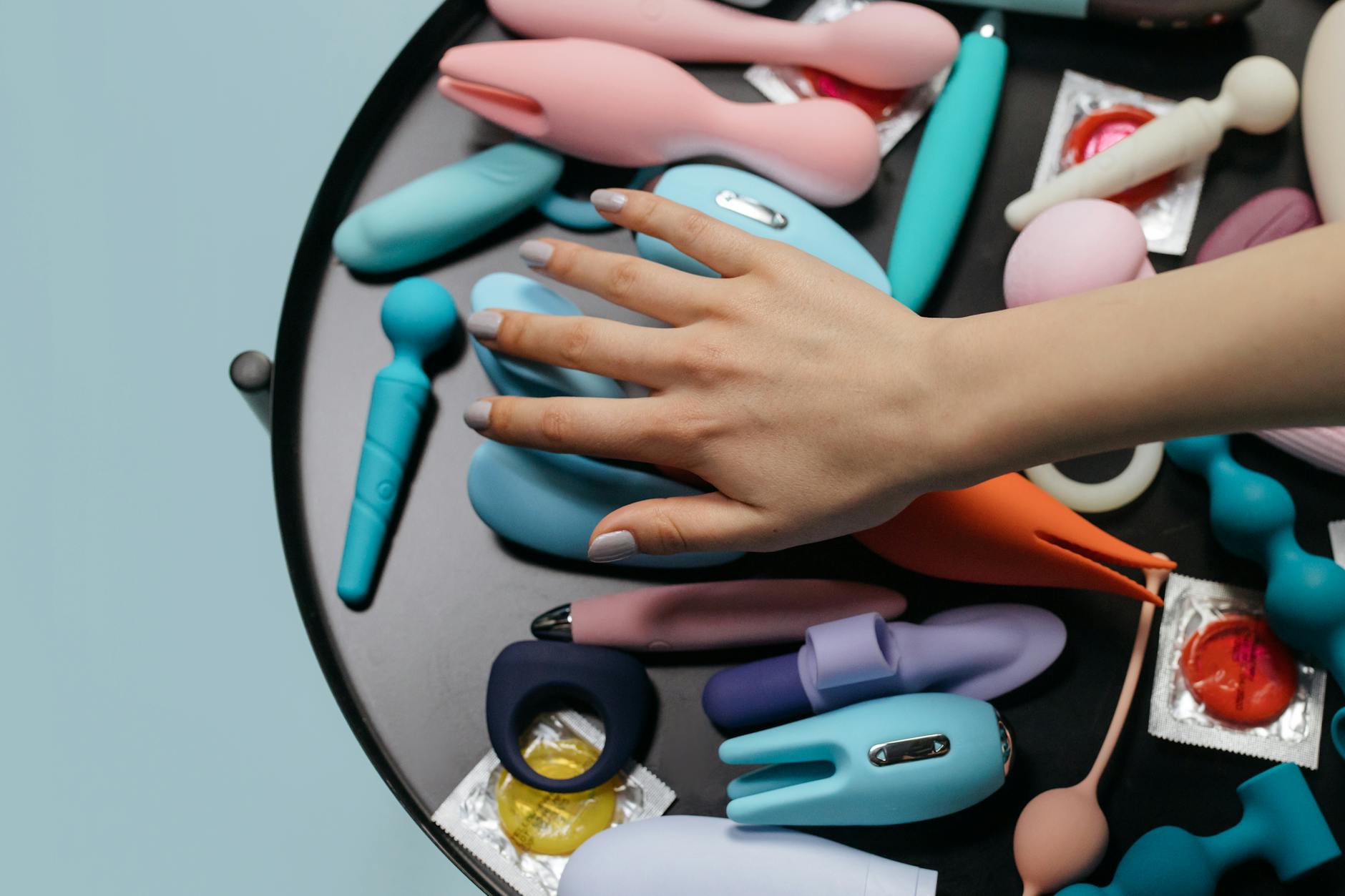
Here's what nobody tells you about desire after a breakup
When a relationship ends or shifts dramatically, desire doesn't just fade. It vanishes. And then it feels like a betrayal of your own body, because you can't even remember wanting anyone, let alone wanting yourself. That's not depression masquerading as low libido, though it can look like it. That's your nervous system recalibrating after major relational rupture.
The good news? Your capacity for pleasure didn't go anywhere. It's dormant, not dead. And one of the most practical ways to wake it up again is solo, on your terms, with no performance pressure. That's where a lemon vibrator comes in.
Why lemon vibrators work specifically for desire recovery
Unlike partner sex, which carries emotional weight when you're grieving a relationship change, solo play with a lemon clitoral vibrator is pure sensation. No negotiation. No vulnerability with another person. No watching their face while you're trying to remember how to feel.
The Lem's suction mechanism is particularly useful here because it doesn't require the kind of mental focus or muscular effort that traditional vibrators do. You don't have to think about rhythm or intensity management. You apply it, the pattern does the work, and your brain gets permission to just... receive pleasure.
That permission is the whole game. After relational trauma or loss, your body often interprets pleasure as unsafe or disloyal. A lemon vibrator bypasses that story because it reframes sensation as self-care, not betrayal. You're not replacing a partner. You're reclaiming yourself.
Starting with sensation before desire
Here's a clinical observation from decades of working with people in transition: desire doesn't come back first. Sensation does. You have to rewire the "this feels good" pathway before the "I want this" pathway reactivates.
Start without any goal of orgasm. That's the trap. When you're already depleted, adding performance pressure (even internal performance pressure) kills the whole point.
Instead, pick a time when you're genuinely curious, not desperate. Sunday morning. Mid-week when the house is quiet. Not 11 p.m. when you're already wrecked. Give yourself 20 to 30 minutes with zero other obligations.
Phase one: Exploration. Use the lowest intensity setting on your lemon vibrator. Run it along your collarbone, your inner arm, your neck. Get familiar with the sensation without any genital goal. This sounds simple because it is. The point is to remember that your skin is alive.
Phase two: Proximity. Move toward your vulva, but don't rush. Outer labia, the crease of your hip, the skin above your pubic bone. Spend 5 to 10 minutes here. Your nervous system needs time to learn that this is safe.
Phase three: Contact. Once that feels easy, apply the lemon vibrator to your clitoris with no agenda. If you feel something, great. If you feel nothing but numbness, that's not a problem either. Both are information. Keep the intensity low and your expectations lower.
When numbness is part of the pattern
After significant relational loss, reduced clitoral sensitivity is common. It's not permanent. It's often a symptom of your nervous system being in protective mode. Tight pelvic floor, shallow breathing, mild dissociation. Your body is saying "I'm not safe here" even though you logically know you are.
A lemon sucker can help reset this pattern because the suction sensation is distinct from penetration or traditional vibration. It activates different nerve pathways. Many people report that after weeks of regular use with zero performance pressure, sensation gradually returns.
If you're using a lemon clitoral vibrator and feeling genuinely nothing after four or five sessions, don't panic. Move into the breathing work. Spend 2 to 3 minutes before your session doing slow, full-belly breathing. That activates the parasympathetic nervous system, the one responsible for pleasure responses.
The emotional boundary that changes everything
The most common mistake people make when using a lemon vibrator during desire recovery is framing it as "getting over" their ex or "moving on." That's heteronormative breakup language, and it doesn't serve you.
Instead, reframe solo play as reconnection with yourself. Not moving past the relationship. Not replacing your ex. Literally just learning what your body enjoys independent of anyone else's preferences or timeline.
If guilt shows up, name it. "I'm feeling guilty because I was taught my sexuality exists for my partner." That's real. And now you're learning it doesn't. Your pleasure is not a betrayal of anyone.
The timeline of desire return
Honestly? It varies. Some people report orgasms within 2 to 3 weeks of consistent solo play with a lemon vibrator. Others take 8 to 12 weeks for genuine desire to resurface. Neither is wrong. Context matters hugely. A breakup after a 3-month relationship moves differently than a 15-year marriage ending.
What I tell clients is this: if you're experiencing any pleasure response, any arousal, any moment where you're curious about what comes next, that's the trajectory shifting upward. Desire doesn't return as a switch flipping on. It returns as small sensations that gradually accumulate into something that feels like wanting again.
When to know solo play isn't enough
If after 10 to 12 weeks of regular use, sensation hasn't budged and you feel genuinely flat across all areas of life, talk to a therapist or your doctor. Sometimes what looks like low libido is actually depression or trauma response that needs clinical support. A lemon vibrator is a tool, not a treatment.
Similarly, if you notice intense pain during use, or if you're using it compulsively as a way to dissociate from grief, that's a signal to pause and get external support. You deserve a trained person in the room, not just a vibrator.
How solo pleasure changes when you're ready for partnership again
Here's something beautiful that happens: once you've spent weeks or months reconnecting with solo pleasure, partnered sex becomes optional rather than obligatory. You know what you enjoy. You know your body can still feel good. You're not desperately seeking someone else's validation that you're still sexual.
That shift changes everything in dating or new relationship formation. You're not seeking completion. You're seeking someone to share sensation with. That's a completely different energy, and partners feel it.
When you do get back into partnered sex after relationship changes, that solo knowledge stays with you. You can tell a new partner, "I like this pattern from my lemon vibrator" or "That intensity works for me." You're speaking from direct experience, not fantasy or obligation.
The practical setup for consistent use
Desire recovery requires consistency. That doesn't mean daily. It means regular enough that your nervous system trusts the pattern. Three to four times a week tends to work well for most people.
Keep your lemon vibrator somewhere accessible but private. Bedroom drawer, lockable box, wherever it's genuinely easy to reach without shame or extra barriers. The easier it is to use, the more likely you are to actually use it.
Charge it beforehand so you never hit that moment where you're ready and the battery is dead. That tiny friction point can kill motivation when your desire is already fragile.
Use water-based lubricant even if you think you don't need it. After relational loss, your natural lubrication often decreases. Lube makes sensation richer and more consistent, which helps recalibrate your nervous system faster.
FAQ
Is it normal to feel disconnected from pleasure for months after a breakup?
Completely normal. Your brain associates pleasure with that specific relationship context, and loss triggers protective numbness. The disconnection is your nervous system trying to keep you safe, not a sign that you're broken. With consistent, low-pressure solo exploration using tools like lemon vibrators, that connection typically reignites over weeks or months.
Can using a lemon vibrator make it harder to enjoy partnered sex later?
Not at all. The opposite, actually. Solo pleasure with a lemon clitoral vibrator teaches your body what it enjoys independent of another person's timeline or preferences. That knowledge makes partnered sex richer and more communicative, not harder. You'll know what you want instead of defaulting to what your partner expects.
What if I feel shame or guilt using a lemon sucker after a relationship ends?
That guilt is almost certainly coming from learned messages that your sexuality exists for someone else's benefit. After relationship loss, your solo pleasure feels like betrayal because you've internalized the idea that wanting anything for yourself alone is selfish. It's not. Your pleasure is a legitimate part of your recovery. Naming that guilt ("I'm feeling shame because I was taught my body was for my partner") helps it lose power.
How long before desire actually comes back if I use lemon vibrators regularly?
There's no fixed timeline. Some people see shifts within 2 to 3 weeks. Others take 8 to 12 weeks or longer, especially after longer relationships or more significant trauma. The key is consistency without pressure. If you're experiencing any sensation, any curiosity, or any moment of "that felt interesting," you're moving in the right direction even if it doesn't feel fast enough.
Should I tell a new partner that I used lemon vibrators during my healing?
That's entirely your call. There's no rule. Some people prefer to keep that solo practice private. Others find it empowering to say, "I spent time getting to know what I enjoy, and here's what I discovered." Either way, the knowledge you've gained stays with you and informs how you show up in future partnerships.
Can lemon clitoral vibrators help if my low desire is from medication or health changes?
Yes and no. If your low desire is from antidepressants, hormone changes, or a health condition, a lemon vibrator can help you stay connected to sensation while you're working with a doctor on the underlying cause. But it's not a replacement for medical care. Talk to your provider about what you're experiencing so they can help identify whether it's relational, medical, or both.
Moving forward
When desire flatlines after a relationship shift, the instinct is often to force it back through partner sex or shame. Neither works. What works is patient, pleasure-focused solo reconnection. A lemon vibrator removes the performance pressure and gives your nervous system permission to feel good without guilt.
Your capacity for pleasure didn't break. It's just recalibrating. That deserves time, gentleness, and tools that work with your nervous system, not against it. If you want support navigating this transition more deeply, reach out and let's talk through your specific situation.