
How menopause actually changes your lemon vibrator experience
Honestly? Your lemon vibrator doesn't break when your period stops. But the feeling changes. Not worse. Just different. And understanding the difference means the pleasure doesn't have to dip at all.
Menopause brings a real physiological shift in how tissue responds to stimulation. Estrogen drops. Tissue thins slightly. Blood flow patterns shift. The clitoris itself doesn't shrink or lose sensitivity, but the surrounding tissue changes, which changes how sensation travels through nerve pathways. A lemon clitoral vibrator still works brilliantly. You just might need to adjust how you're using it.
The good news? Many people report that their most intense orgasms arrive post-menopause, especially with a lemon sucker or other clitoral vibrators designed for air-pulsation rather than direct vibration. This isn't a consolation prize. It's genuinely common clinical observation.
What hormonal shifts do to sensation
Estrogen doesn't power the clitoris. The clitoris has its own nerve density, and that doesn't disappear. What estrogen does is keep tissue plump and well-lubricated. When estrogen drops, vaginal tissue thins. The vulvar tissue becomes less padded. This means stimulation travels through different tissue architecture.
Think of it like this. Your lemon vibrator is the same device, but the body receiving it has changed shape slightly. A lemon clitoral vibrator that felt perfect at 30 might feel too intense at 60 on the same setting, not because you're broken but because the tissue path is different.
Here's what DOESN'T change. The clitoral nerve bundle. The brain's capacity for pleasure. The ability to experience orgasm. The neural wiring that makes something feel good. Those stay constant. Some people report that orgasms feel different texturally. Less dispersed. More localized. Shorter duration but deeper intensity. That's variation, not loss.
Testosterone also drops post-menopause. Yes, people with ovaries make testosterone. It's a major contributor to desire across everyone. Lower testosterone can mean desire takes longer to activate, but once it's activated, it can be stronger. Your lemon sexual toy becomes less about a quick sensation and more about sustained, intentional pleasure.
Why lemon vibrators often feel better after menopause
Here's where it gets interesting. Lemon vibrators and other air-suction clitoral toys work especially well post-menopause because they don't require the same kind of direct friction. They use suction and pulsation instead of pure vibration.
Why does this matter? Because thinner tissue is more sensitive. Direct vibration on thin tissue can feel too sharp or even slightly uncomfortable. Suction distributes pressure differently. It stimulates the entire clitoral complex, not just the surface. For many post-menopausal people, this feels fuller, rounder, more satisfying than vibration alone.
A lemon clitoral vibrator that felt pleasant at 35 might feel absolutely incredible at 55, even though nothing changed about the device itself. You've just developed different preferences through a different body.
Adjustments that make the difference
Four practical shifts will transform your experience with any clitoral vibrator, including a lemon sucker.
Start on lower patterns. If your lemon vibrator has multiple intensity levels, begin at the lowest setting. Your tissue is more reactive now. You can build up. You don't have to start where you left off at 45.
Budget more warm-up time. Arousal takes longer. Not because you're broken. Arousal is a physiological cascade, and blood flow to the genitals takes longer to build without consistent estrogen support. Give yourself 15 to 25 minutes of foreplay or solo exploration before using your lemon clitoral vibrator.
Use lubrication. Even if you've never needed it before. Water-based lube protects thinner tissue and changes sensation in ways many people find deeply pleasurable. It's not compensation. It's a tool. A lemon sexual toy glides differently with lube. Many people prefer it.
Pay attention to pelvic floor tension. The pelvic floor tightens with age and lower estrogen. If you tense during arousal (which many people do instinctively), you're actually blocking sensation. Kegels help the pelvic floor stay strong, but equally important is learning to relax it completely during pleasure. Your lemon vibrator works better when your pelvic floor is relaxed.
The pleasure often gets better, not worse
Here's what I see repeatedly with clients who use clitoral vibrators through menopause. The first year feels like adjustment. By year two or three, orgasms often become more consistent, more intense, and more reliable than they were in the decade before menopause.
Three reasons this happens.
First, mental clarity. The hormonal cycling of your reproductive years creates baseline cognitive noise. That lifts. Focus becomes easier. You can actually concentrate on sensation without your brain simultaneously managing fertility concerns or cycle timing.
Second, permission. Post-menopause, the cultural pressure to be performing softens. People who spent decades calibrating their pleasure around a partner's schedule, energy, or preferences often, for the first time, explore their own authentic response. That exploration with a lemon clitoral vibrator becomes less about achieving a specific outcome and more about genuine curiosity about what feels good.
Third, experience. You've spent decades learning your own body. You know what you like. You know how to direct attention. A lemon vibrator in the hands of someone who's spent 30 years exploring is fundamentally different from a lemon sexual toy in the hands of someone still figuring it out.
When to check in with a doctor
If pain appears during or after using your lemon vibrator or any clitoral toy, that's worth mentioning to your doctor. Genitourinary syndrome of menopause is real. It's treatable. Usually topical estrogen cream clears it in weeks. It's not a permanent condition.
If desire has completely flatlined and isn't returning despite addressing stress, relationship dynamics, and medical factors, testosterone therapy might help. It's prescribed conservatively in the US but it's available, especially through menopause-specialized clinics. For the right person, it's genuinely transformative.
If your lemon clitoral vibrator used to bring you to orgasm easily and now it doesn't, don't assume it's permanent. Your body is adjusting. Give yourself six to eight weeks of experimentation with lower settings, longer warm-up, and lube before concluding something's wrong.
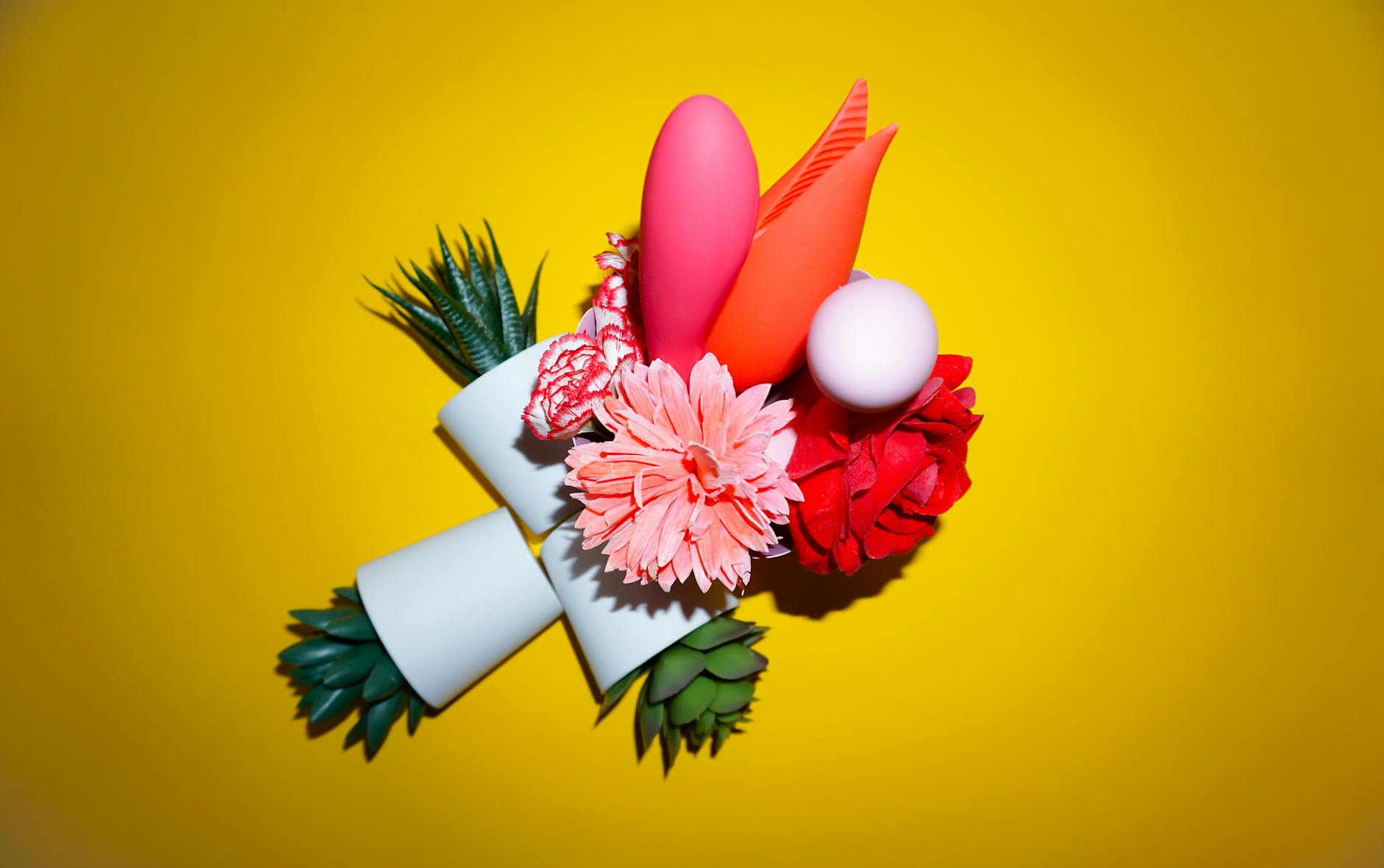
Photo by FounderTips on Pexels
How your lemon sucker sensation changes across patterns
If you're using a Hello Nancy lemon vibrator or similar device, the pattern experience shifts post-menopause.
Patterns 1 and 2, which might have felt too gentle at 40, often become your favorites now. Lower frequency stimulation is surprisingly satisfying on more sensitive tissue. Many post-menopausal users find that patterns 3 to 5 feel too intense, while patterns 1 to 2 deliver consistently strong orgasms.
The suction mode on devices like the Lem becomes particularly valuable. Suction feels less like a vibration and more like a pressure wave. It stimulates nerves without the same mechanical intensity. This is why lemon clitoral vibrators designed with air-pulsation technology resonate so much better with many post-menopausal people than straight vibrators.
The emotional and relational piece matters as much as the physical
Menopause often arrives alongside other midlife transitions. Growing children. Career shifts. Relationship recalibration. Grief. The temptation is to blame the body. Sometimes the body is the actual issue. Often it's something else entirely wearing a hormonal disguise.
If you're with a partner, the most valuable conversation you can have is separate from the physical adjustments. "My tissue is responding differently to my lemon vibrator" is not the same conversation as "I need us to reconnect." Confusing them turns both into dead ends. Keep them distinct. Address the body stuff separately from the relational stuff.
People also ask
Why does my lemon clitoral vibrator feel less intense after menopause?
Tissue thickness changes with lower estrogen. The same stimulation traveling through thinner tissue can feel either gentler or sharper depending on the device design. Air-suction devices like lemon vibrators often feel more intense because suction pressure is distributed, while direct vibration might feel sharper. If your lemon sexual toy feels weaker, try lower patterns with longer warm-up time and lubrication. It's not the device. It's your tissue responding differently.
Can I still use my lemon vibrator the same way after menopause?
You can, but you might not want to. Starting at the same intensity level you used at 45 might feel uncomfortable or overstimulating now. Treat post-menopause like an opportunity to recalibrate. Start lower. Add lubrication. Extend warm-up time. Many people find that adjusted approach delivers better orgasms than their pre-menopause routine.
Does lube actually make lemon vibrators feel better after menopause?
Yes. Lubrication protects thinner tissue and changes how stimulation moves across the surface. With a lemon clitoral vibrator, lube creates a smoother glide and allows more distributed pressure. It's not a fix for a broken body. It's a legitimate tool that changes sensation in ways most post-menopausal users prefer. Use water-based lube with silicone toys.
Will my orgasms come back if they disappeared after menopause?
Often yes, but it takes adjustment. Your body isn't broken. It's changed. If you've been using the same routine with the same intensity settings, your lemon sexual toy might just need a reset. Try lower patterns, more time for warm-up, and lubrication. Give yourself six to eight weeks. If orgasms still aren't returning despite these adjustments, that's a conversation for your doctor. Hormonal or psychological factors might need attention.
Is it normal for pleasure to feel different with a lemon vibrator after menopause?
Completely normal. Estrogen changes tissue architecture. Your lemon clitoral vibrator is the same device, but the body receiving it has changed shape. That's not dysfunction. That's biology. Different isn't worse. Many people report that post-menopausal orgasms with clitoral vibrators feel more intense or more localized than their pre-menopausal experience.
Should I try a different type of vibrator after menopause?
Not necessarily. Lemon vibrators and other air-suction clitoral toys often work better post-menopause than vibration-only devices because suction distributes pressure differently. If your lemon sexual toy isn't working anymore, the issue is usually settings and technique adjustment, not the device itself. Before switching, experiment with lower intensity, more warm-up, and lubrication.
The takeaway
Menopause is not the end of pleasure. It's a recalibration. Your lemon vibrator doesn't stop working. Your body stops needing the same stimulation in the same way. That's not a loss. It's information. Use it. Adjust your approach. Give yourself grace through the transition. By year two or three on the other side, many people find that pleasure becomes simpler, more reliable, and often more intense than it was before.
Your best orgasms might not be behind you. They might be waiting on the other side of this transition, once you figure out what your new body actually wants.