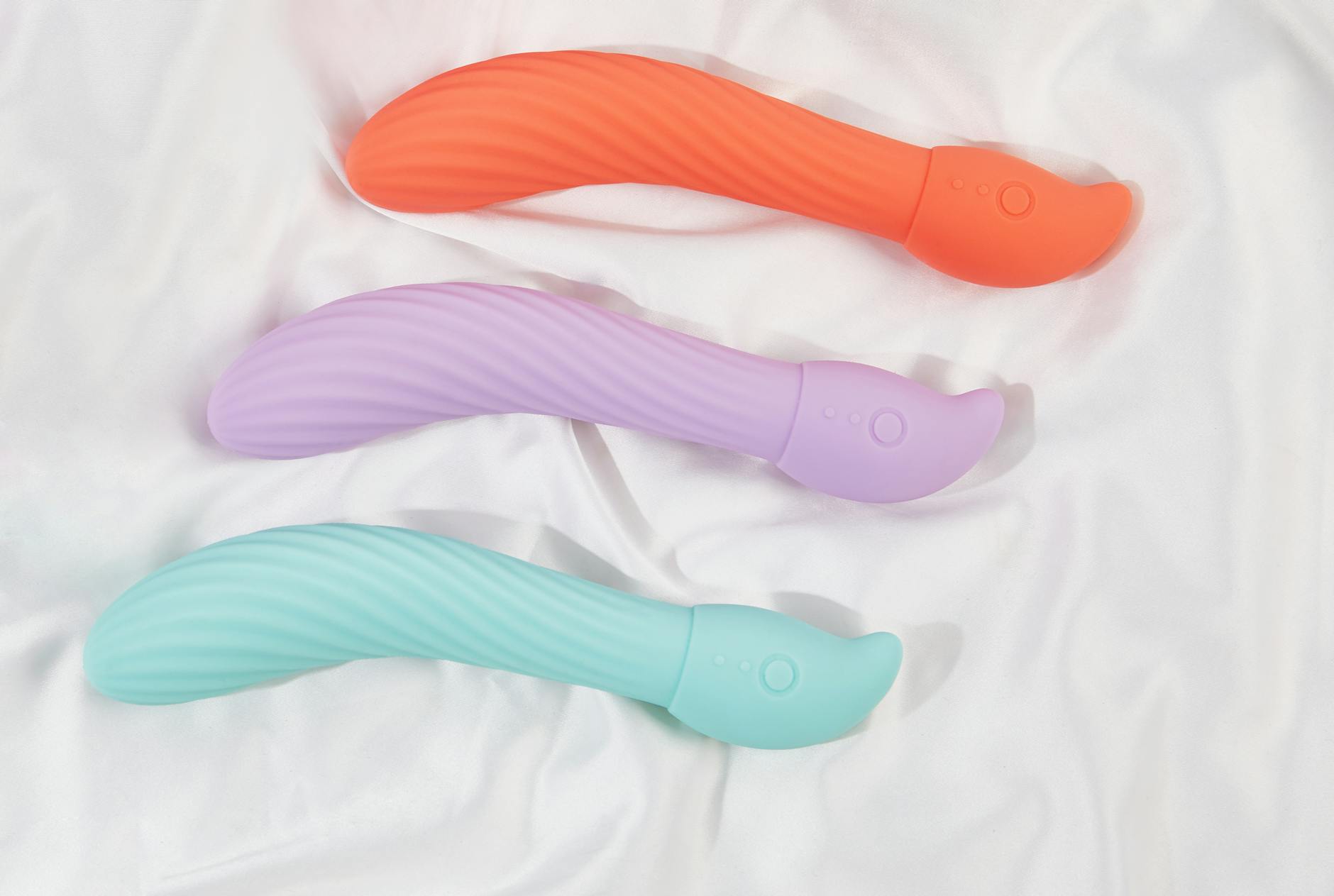
How to Talk to Your Partner About Using a Lemon Vibrator When You're Nervous
Let's be real. Most people don't fear the vibrator itself. They fear the conversation. Specifically, they fear their partner will hear "I want to use a lemon vibrator" and translate it to "You're not enough" or "I'm not satisfied" or worse, "I've already checked out."
That fear is legitimate. But it's also usually based on a communication gap, not an actual problem in the relationship.
I've worked with hundreds of couples navigating this exact moment, and the pattern is always the same. The person who wants to introduce a clitoral vibrator sits with the idea for weeks, spiraling about the worst possible reaction. Then they blurt it out badly, their partner feels blindsided and defensive, and suddenly what could have been a connecting moment becomes awkward and tense.
It doesn't have to go that way. Here's how to have this conversation from a place of honesty instead of fear.
The root of the anxiety isn't usually about the toy
Before you say anything to your partner, let's get clear on what's actually driving your nerves. In my practice, I see three patterns:
First, there's the assumption that wanting a vibrator means something is wrong. It doesn't. Wanting to expand what feels good in your body is not a referendum on your relationship. A lemon vibrator is a tool, like a new position or a massage oil. It's addition, not replacement.
Second, there's the fear that your partner will feel replaced or become insecure. This is real and worth naming, which we'll get to. But most partners feel this way only if the conversation frames the vibrator as an escape hatch instead of an invitation.
Third, there's sometimes an unspoken sense of shame about wanting pleasure in a specific, directed way. If you're carrying that shame, it will bleed into how you present the conversation. Your partner will feel the hesitation and assume the worst.
The antidote to all three is clarity before you speak.
Get honest with yourself first
Spend 10 minutes journaling on these questions, but don't overthink it:
Why do I want to try a lemon vibrator? (Be specific. "More intense orgasms," not "my sex life is boring.")
Do I want to use it solo, with my partner, or both?
Where am I imagining this happening in our intimate life? (During foreplay. During intercourse. When I'm alone. All of the above.)
What outcome am I hoping for? (Stronger sensations. More connection. Less pressure to orgasm. Variety. All valid.)
What's the worst thing I think my partner will say or feel? (Write it. Don't be polite.)
If my partner felt the same way, how would I want them to tell me?
This last question is the key. Most of us know exactly how we'd want to hear this news. We just don't lead with that empathy when it's our turn.
Timing and framing matter more than the words themselves
There's a moment when almost every couple has this conversation, and it's the worst possible one: mid-argument, or post-sex when one person is already vulnerable, or casually while scrolling. Avoid all three.
Pick a time when you're both rested, clothed, and not in the middle of another conversation. Ideally a few hours before you might be intimate. Not "we need to talk" serious (that triggers defensiveness), but intentional. "Hey, there's something I want to bring up that I think could be fun for us."
Frame it as exploration, not critique. The lemon vibrator isn't a solution to a problem. It's a new thing you're curious about. Small shift in language, massive shift in how it lands.
Here's what to actually say
Use a version of this:
"I've been thinking about trying [a lemon clitoral vibrator] and I wanted to talk to you about it. I think it could feel really good for me, and I also think it could be something we use together if you're interested. I wanted to bring it up with you first because I trust you and I value what we have sexually. I'm not saying anything is missing. I'm just curious about exploring something new."
Notice what this does: it names the specific thing (lemon vibrator), explains what you want (the sensation), invites partnership (if you're interested), and reframes it as positive (curious, exploring, not critical).
Then stop talking. Let your partner respond.
If they ask questions, answer them simply. "Will you still want to have sex with me?" Yes, absolutely. "Is this because I'm not good enough?" No, it's because I want to experience more pleasure, and that's not about you. "Can I watch?" Yes, if you're comfortable. "Do you want me to use it on you?" That's up to you and what feels good.
If they're defensive, don't match it. Stay calm. "I get that this feels surprising. That makes sense. I'm not asking for an answer right now. I just wanted you to know what I'm thinking."
What to do if your partner pushes back
Some partners will have an immediate "no" or "that makes me uncomfortable." That's real feedback, and it's worth taking seriously. But it's also not necessarily the final word.
The key is separating their first reaction from the actual concern. Ask: "What worries you about this?"
The answer might be insecurity. It might be a sex negativity they grew up with. It might be they think it means you don't want them anymore. Or it might be something completely different.
Here's what usually works: "I hear you. That makes sense. What if we think of this as something I'm exploring for myself, not something that changes us? And I'd love to know what would make you feel more comfortable."
Sometimes that's time. Sometimes it's wanting to be part of the conversation in a different way. Sometimes it's wanting to learn more. Almost never is it actually a dealbreaker if the relationship is solid.
If your partner is curious but nervous
Many people's second reaction (after the initial defensiveness fades) is curiosity mixed with uncertainty. They might wonder how it works, whether they need one, what it feels like, whether they're supposed to use it during sex.
Invite them in. "We could look at them together. No pressure. Just so you know what we're talking about."
Consider starting solo. Many couples find it less charged if one person tries a lemon clitoral vibrator alone first, then brings it into partnered sex when everyone's comfortable.
What happens after they say yes
The conversation doesn't end at agreement. The real work is follow-through. If you said you wanted to try it together, actually do that. Don't table it for six months. Keep the momentum.
When you do use a lemon vibrator with your partner, communicate in the moment. "This feels good." "A little lighter." "That spot right there." This isn't pillow talk; it's feedback that makes the experience better for both of you.
And if it feels awkward or not what you expected, that's normal. Talk about it afterward. "That was different than I thought it would be. Can we try it like this next time?" Couples who can experiment and adjust together build trust.
The conversation you're actually having
When you talk to your partner about a lemon vibrator, you're not really talking about the toy. You're saying: I feel safe enough to ask for what I want. I trust that you'll listen without shutting down. I think our sex life is worth attention and play.
Those are the actual messages that matter. The vibrator is just the vehicle.
If your relationship can hold a conversation about something vulnerable and specific, it can hold a lot. That's not a small thing. Lean into that.
FAQ: What people really want to know
What if my partner says no and won't budge?
That's real, and it matters. But it's worth understanding why. Is it a values thing? Insecurity? Shame? Sometimes a partner needs time. Sometimes they need reassurance from a professional. If you've communicated clearly and they've heard you and still say no, you get to decide what that means for you. That's between you and them.
Should I buy the vibrator before telling them?
I'd recommend not. It feels sneaky, and it can trigger defensiveness if your partner finds out you already committed to it. Have the conversation first. Then shop together or have them watch you order it. Transparency builds trust.
What if they want to use it but I'm the one getting nervous now?
That's super common. You asked for it, they said yes, and suddenly you're worried it will feel weird or you'll be self-conscious. That's normal. Talk about it. "I'm excited about this, and I'm also a little nervous about how it'll feel. Can we take it slow?" Good partners will meet you there.
Can I use a lemon vibrator if my partner doesn't know about it?
Technically, yes. But I'd gently push back on that. Solo use of a clitoral vibrator isn't cheating or a betrayal, and it shouldn't require hiding. If you feel like you have to hide it, that's a sign the conversation needs to happen anyway.
How do I know which lemon vibrator to start with?
Start with something versatile and not overwhelming. The Lemon Clitoral Vibrator is a solid choice because the suction pattern is gentler than some vibrators and gives you room to explore different intensities. You can adjust as you figure out what feels good.
My partner wants to be involved but I feel self-conscious.
Self-consciousness is about vulnerability, not about them. You get to build that at your own pace. Maybe they start by being in the room while you explore solo. Maybe they use it on you. Maybe you use it together. You're allowed to set the pace.
What if we're long-distance?
The conversation is the same, just adjusted for context. You might be exploring solo more than partnered, and that's fine. You could video together. Or you could just keep each other updated about what you're discovering. The transparency and inclusion are what matter.
You've already done the hard part
Once you've decided you want to try a lemon vibrator and you're brave enough to name it to your partner, the conversation isn't actually that scary. Most partners want their significant other to feel good and to feel invited into that. They just need the information framed in a way that doesn't feel like an attack.
If you're still stuck on the how-to, remember this: honesty isn't complicated. It's just "Here's what I want. Here's why I'm telling you. Can we explore this together?" Everything else is just details.
Your partner probably loves you and wants you to feel good. Lead with that belief, and the conversation usually follows.
Next steps
If talking with your partner about pleasure feels loaded or difficult for other reasons, there are resources that can help. Marriage and family therapy—specifically approaches to maintaining pleasure in long-term relationships—can give you both frameworks for these conversations. And if you're looking for ways to keep things feeling fresh and connected over time, that's a conversation worth having with a professional.
In the meantime, trust yourself. You know your partner better than anyone. You know what tone will land. You know what reassurance they need. Use that knowledge.