Let's name what happened
Your libido didn't leave you. Stress shut it down.
When cortisol spikes, your body deprioritizes everything that isn't survival. Sex is expensive metabolically and emotionally. Under chronic stress, your nervous system essentially files pleasure in the "we'll deal with that later" folder. Which means right now, you're not broken. You're just protecting yourself.
The problem is that waiting for stress to vanish before you think about desire again often backfires. You lose touch with your body. Anxiety about the lost desire gets layered on top of the original stress. And suddenly, rebuilding intimacy feels like yet another task on an impossible list.
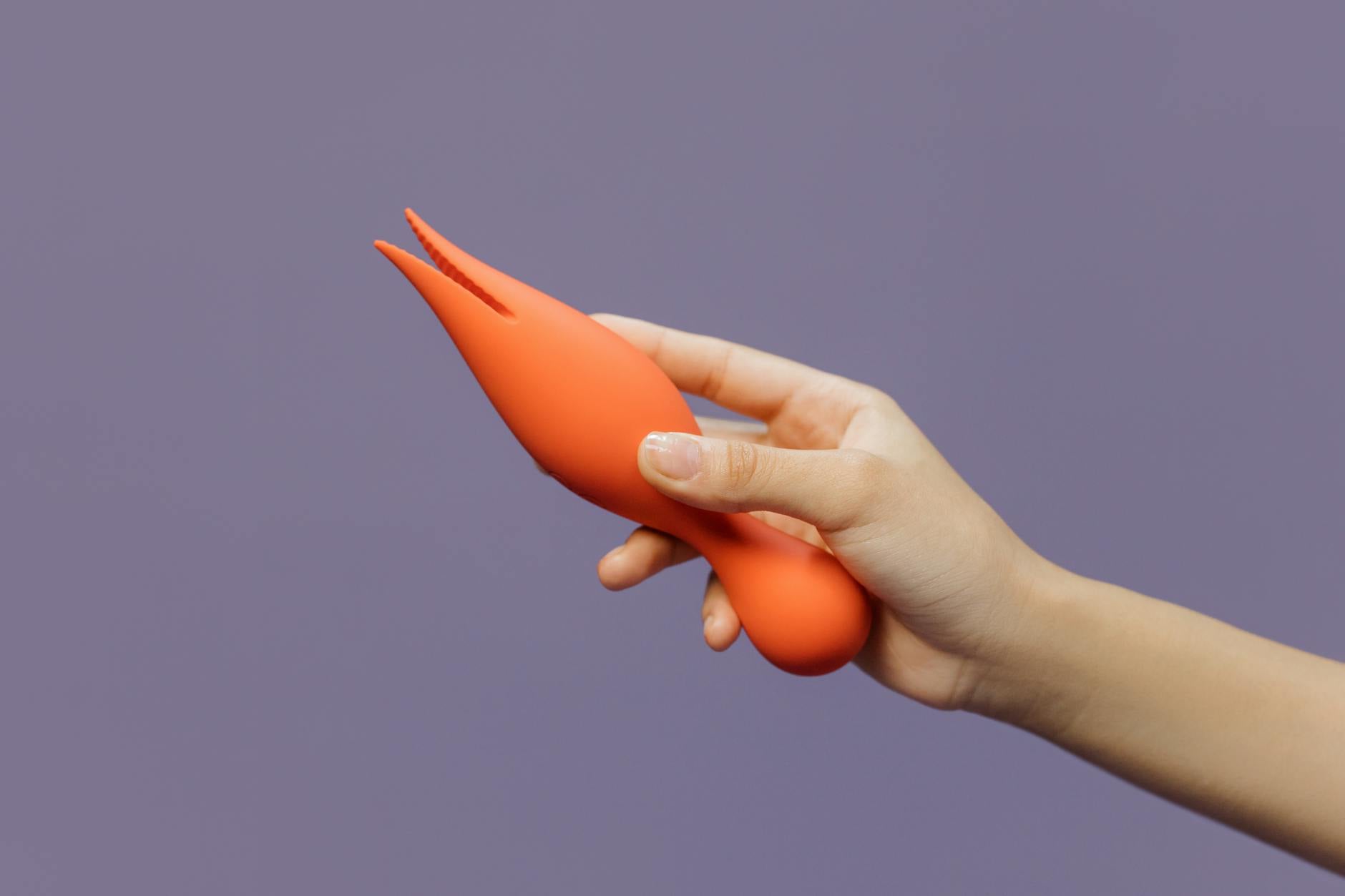
Here's what actually helps: a low-pressure, bodycentered way back in. That's where lemon vibrators come in.
The neuroscience of stress shutting down arousal
When you're under sustained pressure, your amygdala is hyperactive. This part of your brain flags everything as a potential threat. Meanwhile, your prefrontal cortex, which handles pleasure, focus, and future planning, goes quiet. Your body is in a state called sympathetic dominance. That's the fight-or-flight mode.
Arousal lives in the parasympathetic nervous system. It's the rest-and-digest state. You can't be in both at once. So stress literally blocks the neural pathways that allow you to feel turned on.
What's wild is that this happens even when the stressor isn't actively happening right now. Your body stays vigilant. You can't relax into pleasure because part of you is still scanning for danger.
This isn't a libido problem. It's a nervous system problem.
Why clitoral stimulation works when arousal feels dead
Here's the practical part: clitoral stimulation, especially with a tool like a lemon vibrator, bypasses the usual arousal pathway. Instead of waiting for your brain to generate desire, you're activating nerve endings directly. The clitoris has more nerve endings than any other body part, and vibration stimulates them in a way that doesn't require psychological readiness.
You don't have to be in the mood to benefit. You don't even have to want an orgasm. What matters is the sensation itself. Vibration, especially the suction-based pattern of the Lem, wakes up your nervous system without asking it to perform.
Over time, this sensory input helps rebalance your nervous system. You're training your parasympathetic nervous system to recognize safety in pleasure again.
Starting from zero: the no-pressure protocol
If stress has killed your libido completely, here's how to begin:
Set an expectation of zero outcomes. Not "I'm going to masturbate." More like "I'm going to spend 10 minutes with a tool that feels good." No orgasm goal. No arousal goal. Just sensation.
Pick a time when you're slightly less stressed. Not in the middle of a crisis. Sunday morning when nobody needs you. After a shower. These micro-windows of calm are when your nervous system is most receptive.
Start with your lemon vibrator at the lowest setting. If you have a Lem, that's pattern 1. Just let it run against your clitoris for 5 to 10 minutes. Don't chase sensation. Don't try to get aroused. Just notice what's there.
Pay attention to the edges, not the center. The clitoral glans is often too sensitive when you're stressed and armored. Try the clitoral hood, the inner labia, the areas around the clitoris. These often feel gentler and more approachable.
Do this consistently for a week before you expect anything. I mean daily if you can, 10 minutes. Your nervous system needs repetition to understand that this is safe and not another demand.
After about a week of this, most people report a shift. Not necessarily arousal. More like a softening. The permission to feel something small opens the door.
Moving from sensation to rebuilding desire
Once you've spent a few days just sitting with the vibration, you can start adding intention.
Don't call it arousal yet. Call it curiosity. Notice where you feel the sensation most. Does it move? Does it build? Can you follow it?
This is when you can begin exploring the higher settings. If pattern 1 felt neutral, try pattern 2. The goal is finding the intensity that feels good without feeling demanding.
Many people find that a lemon clitoral vibrator, specifically one designed with suction technology, feels less jarring when you're stressed. Suction-based toys create a broader area of stimulation, which often feels more integrative than pointed vibration. Less like being hammered, more like being held.
Once you've found a pattern that works, extend the session to 15 to 20 minutes. Let your nervous system marinate in the sensation. You're not chasing an orgasm. You're just spending time reconnecting with the idea that pleasure is available to you.
The partner conversation, if you have one
If you're in a relationship, your partner might interpret stress-killed libido as rejection. That's the other layer of pressure that keeps desire buried.
Here's what helps: separate the two conversations. "My body and brain are overwhelmed by stress, and I need space to reconnect with myself" is not the same as "I don't want you." But partners often hear the second when they're hearing the first.
Specifically, it might help to tell them: "I'm using a lemon vibrator to rebuild my arousal on my own timeline. This isn't about you. It's about helping my nervous system remember what pleasure feels like." If they want to be involved later, that's a separate discussion.
Some partners find it helpful to know that you're taking action. It reframes the situation from "my partner's desire vanished" to "we're both working on this."
When to seek professional support
If your libido has been completely absent for more than three months, even after stress lightens, talk to a therapist or your GP. Sometimes stress-killed desire masks depression. Sometimes it's a medication side effect. Sometimes it's a sign that the relationship itself is the stressor.
Similarly, if using a lemon vibrator brings up intense shame, numbness, or pain, that's worth exploring with a sex therapist. You might have a deeper disconnection from your body that vibrators alone won't resolve.
But for most people, the combination of lower stress, consistent sensory input, and the permission to take it slow does the work. Your desire doesn't need to be dramatically rebuilt. It just needs a gentle path back.
FAQ
Can a lemon vibrator help if I feel completely numb during stress?
Yes, often. Numbness is your nervous system's way of managing overwhelm. Vibration, especially from a lemon clitoral vibrator, can create sensation that's strong enough to break through numbness without requiring arousal first. Start at the lowest setting and give it time. You're not waiting for arousal. You're waking up sensation.
How long before my libido comes back after stress?
It depends on the stressor. If it's temporary stress that resolves, most people report noticeable shifts within 2 to 3 weeks of consistent use of lemon sexual toys. If the stress is ongoing, you might find that reconnecting with your body becomes a form of self-care and grounding, even if full desire takes longer. The goal isn't to rush back to baseline. It's to stay in conversation with your body while you're stressed.
Should I use a lemon vibrator alone or with my partner?
Start alone. Your nervous system needs to know that pleasure is something you can access independently before you fold another person into it. Once you've rebuilt some baseline sensation, partnered exploration becomes less about fixing a problem and more about sharing something that's working. If you want to eventually introduce toys to your partner, that's a separate conversation worth planning.
What if using a lemon vibrator triggers more anxiety?
That's a sign you're moving too fast or your nervous system isn't ready. Back off completely for a few days. When you return, start with just holding the toy without turning it on. Let your body know this is safe. If anxiety persists, this might be worth discussing with a therapist who specializes in trauma or somatic experiencing.
Does stress-killed libido mean something is wrong with my relationship?
Not necessarily. Your relationship might be rock solid. Your libido might just be telling you that your nervous system is maxed out. That said, if stress from the relationship itself is the issue, no amount of vibrator use will fix it. That requires honest conversation and sometimes couples therapy.
Can I rebuild libido without toys?
Absolutely. Tools like lemon vibrators just make the rebuilding faster and more accessible. You can also rebuild through touch, breathing work, therapy, or reducing stress itself. But if you've tried those and hit a wall, a lemon clitoral vibrator often helps break the stall because it doesn't require the psychological readiness that other approaches do.
The bigger picture
Stress doesn't kill your capacity for pleasure. It just puts the door to that capacity on lockdown. A lemon vibrator is a gentle way to knock on that door repeatedly until your nervous system decides it's safe to open it.
Your libido hasn't abandoned you. You've just given it a reason to hide. The path back is patient, sensory, and often much simpler than rebuilding through willpower alone. Start small. Show up consistently. Let sensation do the work your brain can't right now. Your desire will find its way back.