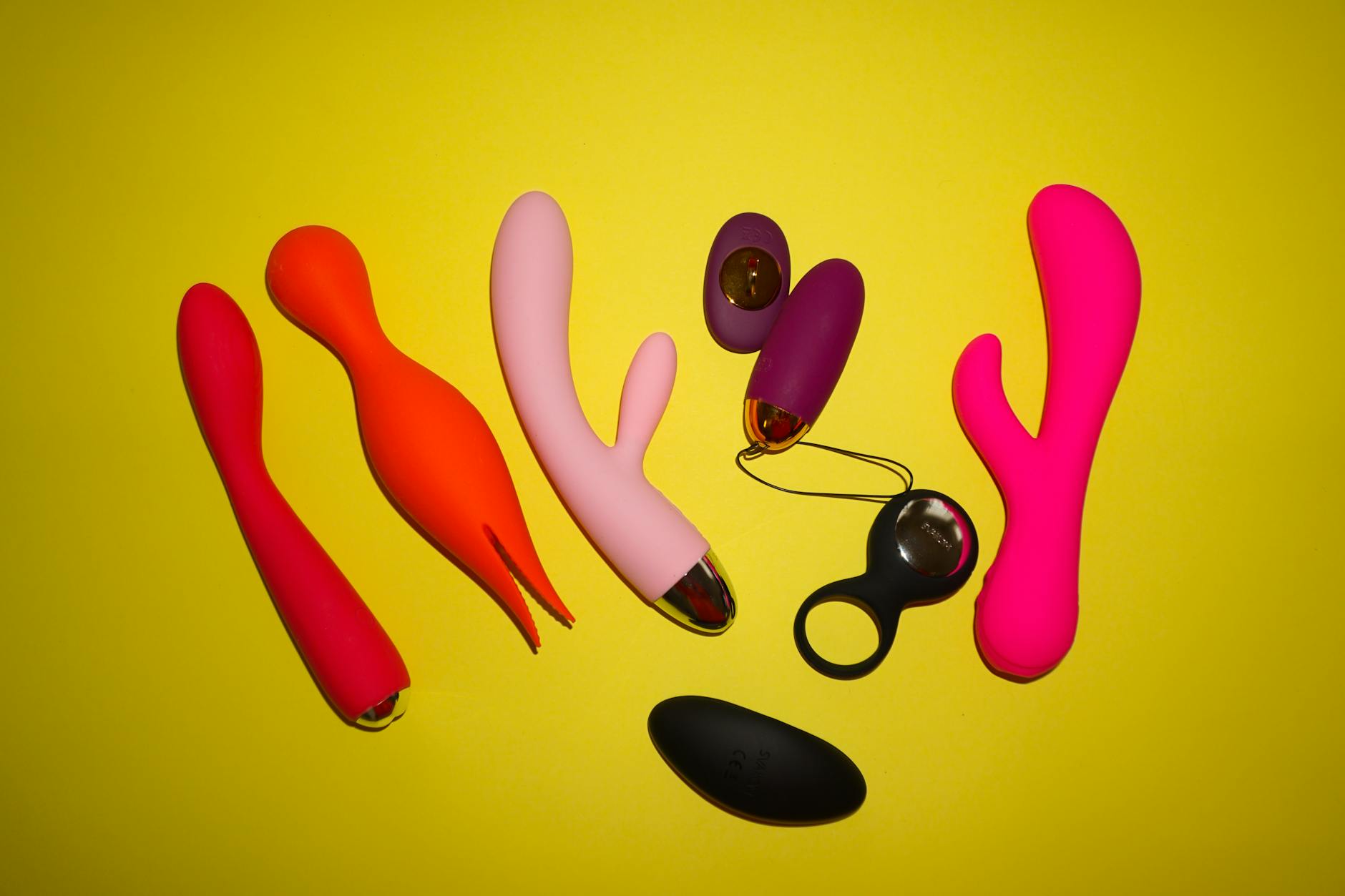
Let's name the thing nobody talks about at dinner parties
Penetration feels good for your partner. It doesn't always get you to the finish line. And somehow, after years of sex education that treats penetration as the main event, most of us assume something is wrong with us when it doesn't. Spoiler alert: nothing is wrong. You're normal. Around 70% of women require direct clitoral stimulation to orgasm, and that number doesn't drop when your partner is inside you.
Here's the plot twist. Adding a lemon clitoral vibrator to penetrative sex doesn't mean your partner failed. It means you're both getting smarter about what actually works.
Why penetration alone usually isn't enough
Let's get anatomical for a second without making it weird. The clitoris has roughly 8,000 nerve endings concentrated in a tiny area. The vagina, by contrast, has far fewer. When your partner is inside you, the angle of entry, the depth, the rhythm, the pressure, all of it is optimized for their anatomy and pleasure. Your clitoris is often just... there. Stimulated indirectly, if at all.
Your partner isn't bad at sex. The geometry is just working against you.
Add a lemon vibrator to the equation, and suddenly you're getting direct, consistent stimulation to the area that actually has the neural real estate for orgasm. That's not a workaround. That's a solution.
The conversation you need to have first
Something I see couples struggle with: they treat vibrators as a failure rather than an upgrade. One partner interprets the introduction of a toy as "I'm not enough for you." The other partner feels resentful that they have to ask for what they need.
Here's what actually needs to happen: a low-stakes conversation outside of the bedroom. "My body works differently than I thought. I'm not going to orgasm from this alone, and that's not about you. I want to figure out how we both finish satisfied." Frame it as a logistics problem, not a performance problem. Because it is.
If your partner is resistant, read how lemon vibrators work in couples play when one partner feels threatened. Sometimes resistance is about feeling replaced. Sometimes it's about never having had a framework for toys. Either way, it's solvable.
Positioning: the four angles that actually work
Not all positions are created equal when you're adding a vibrator to the mix. You need angles that give your partner stable access to you, while leaving your clitoris accessible to the vibrator.
Missionary with side access. Your partner is on top, inside you. You're on your back, legs bent. This gives you direct access to your clitoris with the vibrator while your partner stays engaged. The Lem's curved shape is perfect here because you can hold it horizontally against your clitoris without it slipping around.
You on top, hands on their chest. This is the goldmine position for most people. Your partner is inside you. You're controlling the rhythm and depth. Your hands are free, which means you can hold a lemon vibrator against your clitoris while they stay inside you, and you're the one driving the motion. You get clitoral stimulation, depth control, and they get the sensation of being inside you. Everyone wins.
Spooning from behind. Your partner enters from behind while you're both lying on your sides. This angle is deeper and feels different from face-to-face, which some people find helps them focus. Your clitoris is still accessible with a vibrator in front.
Side-by-side. You're both on your sides facing each other. Less penetration depth, but maximum access to your whole front body. A lemon vibrator fits naturally between you. Some couples find this position feels most intimate because you're still connected face-to-face while you're stimulating your clitoris.
Lubrication, rhythm, and the timing question
Here's something I tell couples all the time: the vibrator isn't competing with your partner's motion. It's complementing it. They're providing rhythm and depth. The vibrator is providing direct clitoral stimulation.
Start with lube. Always. Water-based works with silicone vibrators. Apply it generously to your clitoris before you bring the vibrator in. This helps the vibrator glide without friction and makes the sensation less intense if you're new to layering stimulation.
On rhythm: your partner might need to go slower than usual so you can hold the vibrator steady against your clitoris. Communication mid-sex matters here. "A little slower" or "same pace" helps them recalibrate. If they're going fast and hard, the vibrator bounces around and loses contact. You lose the benefit.
On timing: some people turn the vibrator on before penetration starts. Others wait until penetration is already happening. There's no wrong answer. Pay attention to what builds momentum for you. If you need the vibration to build arousal, turn it on early. If you're already aroused and need it to push you over, add it at peak intensity.
What to do if your clitoris retracts or feels numb
Some people experience something unexpected when they add external stimulation during penetration: their clitoris retracts. This is a normal physiological response to pressure or overstimulation. It doesn't mean something is broken. It means the vibrator is hitting a sensitivity threshold.
Two fixes. First, try a lower vibration pattern. The Lem has five patterns. Start at pattern 1 or 2 rather than jumping to 5. Second, try a lighter touch. You don't need to press the vibrator hard against your clitoris. Sometimes a gentle hover with just enough contact is more effective than firm pressure.
If you're on antidepressants or experiencing reduced clitoral sensitivity for other reasons, read how lemon vibrators work when antidepressants reduce clitoral sensitivity. The layering technique still works; you just might need more intensity or longer build-up time.
What happens when your partner is close but you're not (yet)
This is the real-world scenario most couples actually face. Your partner is approaching orgasm, but you're only halfway there. Stopping isn't the answer. Speeding up often backfires because you lose control of the vibrator. Here's what works.
Tell them: "Keep going at your pace. I'm handling my side." You have the vibrator; you control your stimulation. They focus on what gets them there. When they're close, they can communicate ("I'm almost there") and you match intensity. Or they can finish, stay inside you (if that feels good), and keep the position stable while you reach your orgasm with the vibrator.
I know what you're thinking: "That sounds awkward." It's not, because you've already had the conversation that this is how your body works. It's not a plan B. It's the plan.
Aftercare and what to talk about after
Once you've both finished, there's a small conversation that matters. "That felt different. What worked for you?" Not in a clinical debrief way. Just genuine curiosity. Did the angle feel right? Did the rhythm work? Did the vibrator feel good against them (some partners enjoy that too)? This casual check-in does two things. It normalizes the vibrator as part of your sex life together. And it gives you data for next time.
Common hiccups and how to fix them
The vibrator feels impersonal. That's usually about positioning. If you're holding it stiffly at arm's length, it will feel distant. Hold it closer to your body. Use your other hand to touch your partner. Eye contact. Connection matters more than perfect geometry.
Your partner loses sensation inside you. This sometimes happens if the angle changes when you bring the vibrator in. Adjust your positioning slightly. Often a small tilt of your hips restores the sensation they're looking for.
The vibrator keeps slipping or losing contact. You might need more lube, or a different angle. Try tilting the vibrator slightly rather than holding it flat. Or press upward instead of directly on your clitoris, which sometimes anchors it better.
The long-term perspective
Most couples who introduce a lemon clitoral vibrator to penetrative sex do one of two things. Some use it every time. Others use it when they're tired or when they want to ensure mutual satisfaction without a long wind-up time. Both are fine.
What changes is the dynamic. You stop treating orgasm as something that should happen automatically from one activity. You get curious about what your body actually needs. Your partner stops making penetration the whole show. You both get smarter about pleasure.
That's not less intimate. It's more intelligent.
People also ask
Can I use any vibrator during penetration, or do I need a specific shape?
You need a vibrator that's accessible from the front while your partner is inside you. The Lem is designed specifically for this because of its curved shape and external-only contact. Wand vibrators work. Internal vibrators designed to be worn inside won't help you here. Stick with external clitoral vibrators that you can hold in your hand.
What if my partner wants to hold the vibrator instead of me?
That's totally fine and actually shifts the dynamic in an interesting way. Some couples find it increases connection because your partner is now actively involved in your stimulation. Set up a signal first: "go faster," "lighter pressure," "stay here." Your partner needs feedback on what intensity works. If they're holding it, you're the guide.
Does using a vibrator during penetration mean my partner will feel less sensation?
Not necessarily. It depends on positioning and angle. Most of the time, sensation is actually the same or better because everyone is more relaxed and focused on what feels good. If your partner does report reduced sensation, try a different angle or position. You're solving for geometry, not pleasure capacity.
Will my partner feel the vibrator if I'm holding it against my clitoris during penetration?
Yes, but not intensely. They'll feel the subtle vibration through the shared tissue, but it won't be distracting. Most partners say it feels interesting rather than intrusive. Some actually enjoy the subtle buzz.
How long should we wait to try this if we're used to penetration without toys?
Not long. Have the conversation. Try it the next time you're intimate. The more you overthink it, the weirder it feels. The more you just do it, the more normal it becomes.
What if I've been faking orgasms and now I want to actually reach them with the vibrator? Will my partner feel betrayed?
This is separate from the vibrator question, but important. The vibrator is not the place to have that conversation. Have the honesty conversation separately, outside the bedroom. "I want to explore what actually feels good for me" is a vulnerable thing to say. Do it before you introduce the toy. Then using the vibrator is the solution, not the shock.
Let's be real. Most couples can solve this with genuine curiosity about what works and a willingness to try something new. A lemon clitoral vibrator is just a tool that makes mutual satisfaction more straightforward. The work is the conversation and the willingness to think about sex differently. The vibrator is just the practical part.
If you're ready to explore this, you might also want to check out how to use lemon vibrators when your partner has low libido for a different kind of mismatch, or how to communicate about toys with a new partner if you're just starting this conversation.
Your pleasure matters. Your partner's pleasure matters. The fact that you need something different doesn't mean anyone failed. It means you're paying attention. That's the beginning of better sex for both of you.